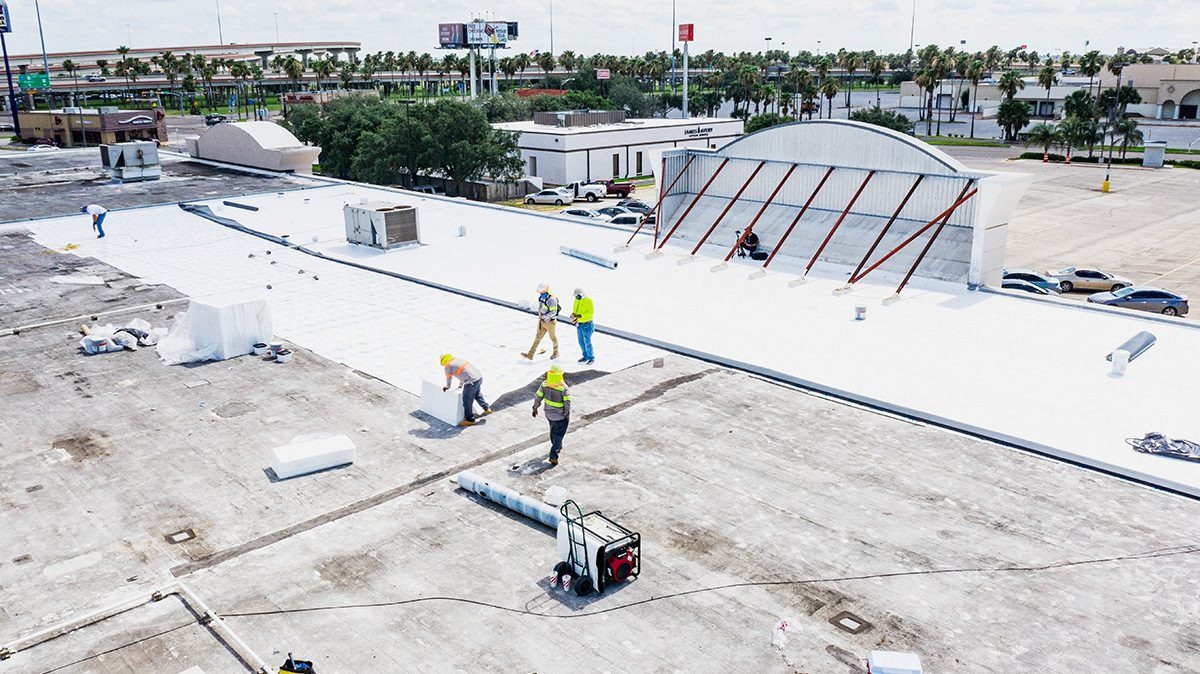
Warehouse and Distribution Center Roofing in Minneapolis, MN
Commercial roofing for warehouses, distribution centers, and industrial facilities throughout Minneapolis, MN. TPO, EPDM, and metal roof systems.
Target Corporation's global supply chain headquarters in Brooklyn Park and its distribution network of regional DCs across the Minneapolis-St. Paul metro define the standard for warehouse roofing excellence in the upper Midwest. Minneapolis sits at the northern extreme of the continental US commercial roofing market, with a climate that combines the coldest winter temperatures experienced by major warehouse operators in the country, heavy snow loads, dramatic spring melt events, summer storms that include high winds and significant hail, and a freeze-thaw cycling frequency that stresses membrane seams and sealant joints more aggressively than almost any other US market. Getting warehouse roofing right in Minneapolis requires a cold-climate specialty approach, not a generic commercial specification.
Snow and cold are the dominant design constraints for Minneapolis warehouse roofing. The ground snow load for Hennepin County is approximately 40–50 psf, and Minneapolis sees 50–60 inches of annual snowfall in typical years. Design temperatures in Minneapolis can reach -30°F in severe winters, which creates conditions that test every cold-weather roofing material to its limits. EPDM with cold-temperature-rated adhesives and accessories remains the dominant membrane choice in the Minneapolis warehouse market because it maintains flexibility at -40°F, well below any temperature the city actually experiences. Modern cold-climate TPO formulations have improved, but the Twin Cities contractor community's EPDM experience is deep, and that expertise matters for quality installations.
Drainage engineering for Minneapolis warehouse roofs must treat the spring melt event as equal in design significance to the summer storm event. Minneapolis's spring melt in March and April can produce 6–10 inches of water equivalent within a week as accumulated snowpack releases during warm-up periods. A roof that drains adequately in summer can be completely overwhelmed during a fast-melt spring week if drain bowls have iced over during winter. Electrically heated drain bowl assemblies are not optional in the Minneapolis climate—they are the technology that keeps primary drains functional through the freeze season. Heat-traced drain lines from the bowl to the warm building envelope are the complete specification; stopping the heat trace at the bowl level leaves the vertical drop pipe vulnerable to freezing.
Dock penetrations at Minneapolis distribution facilities face freeze-thaw cycling that occurs 80–100 times annually—every temperature excursion from above freezing to below and back again. Standard pitch pocket sealants and pipe boot materials that perform adequately in moderate climates experience cumulative fatigue failure from repeated freeze-thaw cycling in Minneapolis. The specified materials for penetration flashings at Minneapolis warehouses should include cold-temperature silicone sealant rated for -60°F service, pre-formed EPDM pipe boots with factory-seam tape rather than field-applied sealant, and custom metal pitch pockets for irregular penetrations with adequate accommodation for thermal expansion.
Forklift operations in Minneapolis warehouse facilities are transitioning to electric equipment under both sustainability programs and operational efficiency incentives, but propane equipment remains common. The critical difference in the Minneapolis market is that winter building heating loads mean propane exhaust stacks are operating at maximum capacity during the coldest months—the same months when sealant at those penetrations is under maximum thermal stress. A semi-annual inspection schedule that includes a spring inspection after the freeze season has concluded is the appropriate maintenance interval for propane exhaust stack flashings in this climate.
Energy efficiency in Minneapolis warehouse roofing is governed by Minnesota's commercial energy code, which follows ASHRAE 90.1 and requires R-30 minimum for low-slope commercial assemblies in Climate Zone 6A. Minneapolis's position as one of the coldest major commercial markets in the US means that heating degree days can exceed 9,000 in severe winters, and the economic value of additional insulation above the code minimum is real and substantial. A warehouse with R-30 existing insulation that upgrades to R-35 or R-40 during a re-roofing project will see meaningful fuel cost savings given Minneapolis's heating season length and severity.
The recover versus tear-off decision for Minneapolis warehouses must account for the specific degradation patterns of cold-climate EPDM systems. EPDM systems installed before 2000 used adhesives that can become brittle and fail in cold temperatures, creating the phenomenon of adhesive-bonded systems that separate from the substrate during January cold snaps. A roofing contractor evaluating a pre-2000 Minneapolis warehouse EPDM system should assess adhesive bond integrity as part of the condition assessment—not just check for seam integrity and membrane surface condition. A system with failing adhesive bond is not a good recover candidate regardless of the membrane surface condition.
The Twin Cities commercial roofing contractor market includes some of the most experienced cold-climate commercial roofers in the country. Firms that have operated in the Minneapolis market through multiple severe winters understand cold-weather installation requirements and cold-climate maintenance needs in a way that cannot be replicated by visiting contractors from warmer markets. For large industrial projects, prioritize contractors with documented experience on comparable Minneapolis-area warehouse facilities, manufacturer certification for the proposed membrane system, and emergency response capability for winter weather events. The ability to mobilize for emergency repairs during a Minnesota winter—when temperatures may be below -10°F—is a real differentiator in this market.
Replacement costs for Minneapolis warehouse roofing are in line with the regional market, reflecting competitive Wisconsin and Minnesota contractor pricing. Budget $11–$16 per square foot for a standard EPDM or cold-climate TPO recover with R-30 polyiso insulation, and $16–$23 for a full tear-off and replacement. Annual snow removal is a recurring operating cost for Minneapolis warehouse operators; budget $8,000–$25,000 per occurrence depending on building size and snow event severity. Commercial property policies in Minnesota typically cover wind and hail damage and should be reviewed for exclusions related to snow load damage, which is typically covered but sometimes subject to a separate deductible.
How do I know if my Minneapolis BUR roof needs repair or full replacement?
The decision turns on moisture saturation in the insulation layer. If core sampling shows wet insulation in more than 25% of the roof area, replacement is typically more cost-effective than recover — saturated insulation has to be removed regardless, and at that percentage the removal and disposal cost closes the gap between recover and replacement. If wet areas are under 25%, we cut out the wet insulation, replace it, and recover the system. We document every core pull and give you the data to make the decision — we do not make a replace recommendation on surface condition alone.
Can you work on BUR roofs in Minneapolis winters?
Repair and maintenance work on BUR systems can be done in winter with appropriate materials — modified bitumen torch patches, cold-applied sheet materials rated for cold-temperature application, and peel-and-stick flashing products that maintain bond at low temperatures. Hot-mop BUR installation (new multi-ply systems installed with a kettle and hot bitumen) requires substrate temperatures above the minimum specified by the bitumen manufacturer — typically 40°F for the substrate, not ambient — which limits full-system installation to the warmer months. Emergency dry-in work in winter uses temporary materials that are replaced when conditions allow.
Does working on an existing BUR system require special disposal procedures?
Older BUR systems — particularly those installed before 1975 — may contain asbestos-containing materials in the ply felts or the bitumen compound. We require an asbestos survey prior to any core sampling or tear-off on BUR systems that predate 1975. The survey is the building owner's responsibility, but we can coordinate with qualified industrial hygienists in the Minneapolis market. Asbestos-containing BUR systems require abatement by a licensed asbestos contractor before roofing work proceeds — this adds time and cost to the project scope and needs to be in the project plan before contract signing.
Get a BUR assessment for your Minneapolis commercial building.
Our project managers will inspect the system, pull moisture cores at suspect locations, document the condition, and give you a written report that separates repair from recover from replacement — with the data to back it up.
- Solar Roof Integration
- Commercial Roof Maintenance
- Parapet Wall Repair
- Roof Asset Management Program
- Office Building Roofing
- Preventive Roof Maintenance
- Auto Dealership Roofing
- About