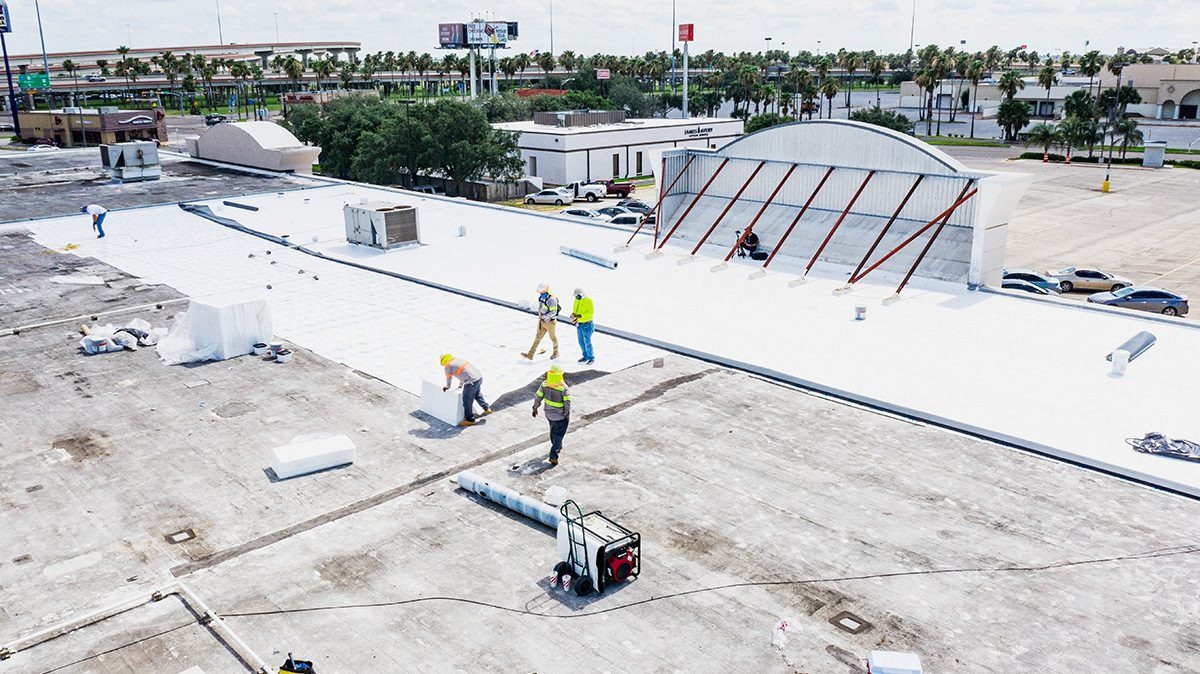
Hail Damage Roof Repair Minneapolis MN
The Twin Cities metro has recorded multiple hail events producing stones of 1.5 inches or larger within Hennepin County in every five-year period from 2010 to 2024. Large-diameter hail causes functional damage to commercial flat roofing membranes that is not visible from ground level or from a casual surface inspection — and that damage may not produce a leak for 12 to 24 months after the event.
Hail damage on commercial flat roofs is the most misunderstood storm damage type in the Minneapolis insurance market. On a residential shingle roof, hail damage is apparent from the ground. On a commercial TPO or EPDM membrane, a 1.75-inch hailstone may produce no visible surface disruption while fracturing the membrane backing, compressing the insulation facesheet at the impact site, and creating a micro-void that wicks moisture for the next two winters before it becomes a visible ceiling stain.
The NWS Twin Cities office documents hail events for Hennepin and Ramsey Counties through the Storm Data publication. Reviewing that record for the years 2019 through 2024, Hennepin County experienced eight hail events with reported stones of 1.5 inches or larger — one to two per year on average. The damage from those events is distributed across the commercial roof inventory unevenly: the storm track determines which buildings received direct impact, and the building's roof system age and membrane thickness determine how the impact affected the membrane.
We inspect commercial roofs after documented hail events using the industry-standard methodology — systematic grid walk, impact count per test square, diameter documentation, cross-section sampling at impact sites — and produce a documentation package that Minnesota commercial property adjusters can work from without conducting their own roof access.
How hail damages Minneapolis commercial flat roofing membranes
TPO membranes crack at hail impact sites when ambient temperatures are below 40°F — a condition that occurs frequently in Minneapolis during the May shoulder-season hail events that account for a significant share of the annual hail record. Cold TPO is less flexible than warm TPO, and a 1.75-inch hailstone at 35°F surface temperature delivers a concentrated impact load that can crack the membrane facing even though the surface appears intact. The crack propagates through the backing scrim and creates a breach that is not detectable by visual inspection.
EPDM membranes — more flexible at low temperatures than TPO — are more vulnerable to cutting damage from irregular-shaped hail. Large supercell hailstones that develop in the Minnesota spring storm environment are frequently irregular, with sharp edges that cut EPDM membranes where TPO would crack. Modified bitumen membranes are more impact-resistant than either single-ply, but their granule surfacing is stripped by large hail, leaving the underlying membrane exposed to UV degradation.
Minneapolis commercial buildings with large rooftop mechanical units — the healthcare campuses at Fairview Southdale and North Memorial, the corporate campuses in the Eden Prairie tech corridor — present a specific hail assessment challenge: the equipment shadows portions of the roof during the hail event, meaning the damage pattern is not uniform. We document equipment locations in relation to the storm track to account for shadowed zones in the impact count.
The hail inspection methodology we use
We divide the roof into 10-foot by 10-foot test squares and walk each square systematically, logging the number of visible impacts per square and the diameter of the largest impact marks. Impact diameter is measured with a hail impact template. At sites showing membrane surface disruption, we cut a 4-inch membrane plug and examine the cross-section — functional damage penetrates the full membrane thickness; cosmetic damage bruises the surface without penetrating. Both findings are documented with photos and measurements.
The inspection report includes: the test square impact count grid, photo log organized by zone, cross-section documentation at penetration sites, and a scope summary identifying zones requiring membrane replacement versus zones with cosmetic damage only. We also retrieve NWS Storm Data records and CoCoRaHS hail observations for the event date and confirm the storm track relative to the building location — supporting documentation that adjusters include in the claim file.
Hail damage repair scope and insurance coordination
Not every hail-damaged Minneapolis commercial roof requires full replacement. If impact counts fall below the functional damage threshold and cross-sections show no penetration, the correct scope is a documented inspection report with no immediate repair and a 12-month follow-up inspection scheduled. If impact counts and cross-sections
We write hail damage scopes in Xactimate-compatible line items. Common items that initial insurance estimates miss on Minneapolis claims: ice and water shield replacement at parapet flashings where hail-caused membrane damage creates a secondary breach path; replacement of rooftop equipment curb flashings that received direct impact; and drain bowl inspection and replacement where hail has cracked the drain body.
How soon after a Minneapolis hail event should I have my commercial roof inspected?
Within 30 days of the event, at minimum. Most commercial property policies have a 60-to-90-day reporting requirement from the event date. Minneapolis's spring hail season can produce multiple events in a short window — earlier inspection creates a clean record tied to a specific storm, rather than commingled damage from two or three events. We retrieve NWS storm records to establish the event date precisely.
Does hail damage void my commercial roof manufacturer warranty?
Hail damage is typically a warranty exclusion — manufacturer warranties cover installation defects, not storm events. If insurance proceeds pay for membrane replacement in hail-damaged zones, the warranty clock resets on the replaced sections and we complete manufacturer warranty enrollment at the time of repair. We coordinate the repair and warranty documentation together.
Hail damage inspection and insurance documentation.
- Fire Damage Roof Repair
- Structural Roof Damage Assessment
- Insurance Claim Roof Documentation
- Snow Load Damage Roof Repair
- Ice Storm Damage Roof Repair
- Hotel Roofing
- PVC Roofing
- Roof Asset Management Program