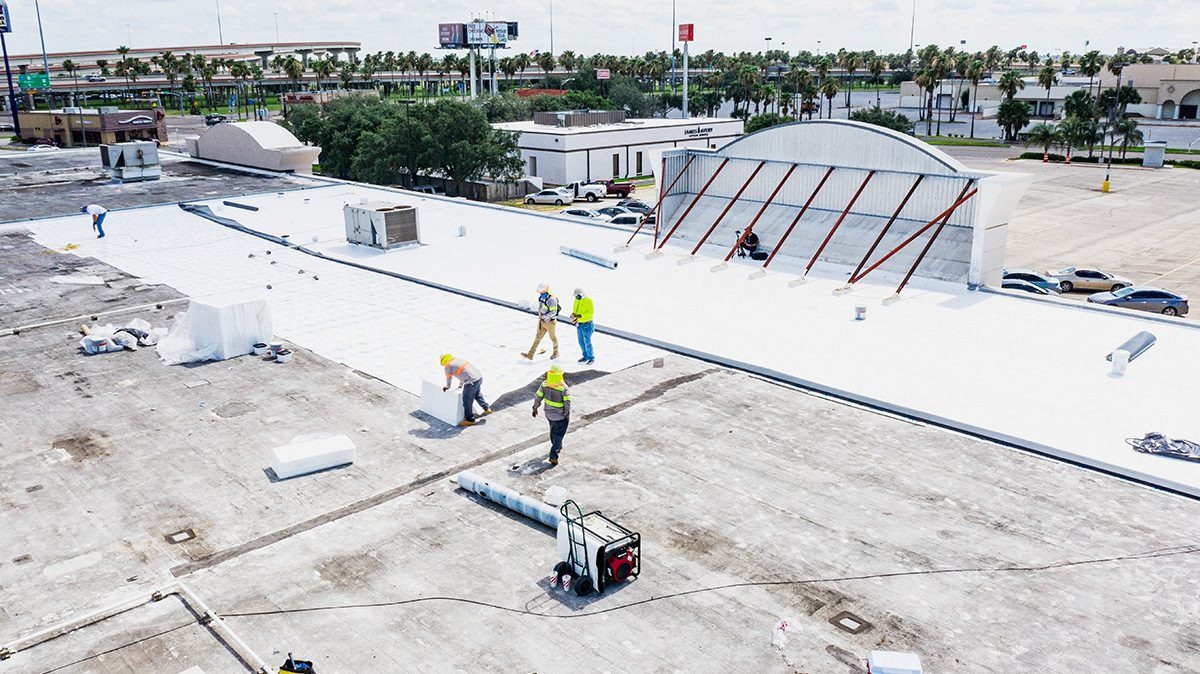
Education Facility Roofing Minneapolis
Education buildings in the Twin Cities follow a distinct capital calendar — replacement and major repair projects are compressed into a 10-week summer window between academic years, and the documentation requirements for bond-funded public school work are unlike any other sector. The University of Minnesota, Macalester College in St. Paul, and Minneapolis Public Schools each have their own facilities management processes, but the summer-window pressure is common to all.
The University of Minnesota's Twin Cities campus spans both sides of the Mississippi River in Minneapolis and St. Paul, with the main Minneapolis campus stretching from the East Bank research facilities along Washington Avenue to the West Bank arts and humanities buildings near Cedar-Riverside. The U's Facilities Management division runs a sophisticated capital project process that includes hot-work permit requirements specific to the university, LEED documentation mandates for projects on buildings targeted for certification, and infection-control coordination for projects near medical research facilities in the Health Sciences complex. We understand the U's procurement and permitting environment and have completed work on buildings in the university corridor.
Macalester College's campus in St. Paul, on Grand Avenue in the Mac-Groveland neighborhood, has a mix of building vintages from the late 1800s through the 2010s. Older academic buildings have historic facade and slate or clay tile roof elements that require careful flashing detailing at the transition to flat roof sections — a standard problem on historic college campuses that standard commercial contractors are not equipped to handle. We scope the historic-transition detail work as part of the full project scope.
Minneapolis Public Schools operates a large estate of K-12 buildings across the city, most constructed between 1920 and 1975 with flat roof sections that have been patched and recovered multiple times. MPS bond program projects — funded through school district general obligation bonds — require prevailing wage compliance documentation, MBE/WBE supplier reporting, and certified payroll submission. We are familiar with the documentation requirements for publicly funded school district projects and can deliver the compliance package that bond program administrators require.
Summer Window Scheduling and Academic Calendar Pressure
Education roofing projects in the Twin Cities run from mid-June through late August — a 10-week window that is the only time when classrooms, libraries, and administrative buildings can sustain the noise and access disruption of a major roofing project. Within that window, we schedule the most disruptive operations (tear-off, crane lifts) for the earliest weeks and plan production to reach the membrane-installation phase — quieter and lower-vibration — by early August when some fall-semester preparation begins.
For universities and colleges with graduate programs and research facilities that run year-round, the summer-window compression is less absolute but still the primary production period for large projects. The U of M's research buildings have occupied labs and graduate student offices year-round, and their roof projects require a pre-construction plan that identifies which buildings can accept summer-window interruption and which require a phased approach that extends into the academic year with restricted production windows.
K-12 summer projects have the tightest scheduling pressure of any education segment. Minneapolis Public Schools buildings are typically turned over to facilities for summer work in mid-June and must be ready for teacher prep days in late August — giving us 10 weeks maximum from mobilization to final punch. We schedule these projects to complete the waterproofing phase by the end of the seventh week, leaving the final three weeks for punch, warranty inspection, and closeout.
Bond Program Documentation and Prevailing Wage
Minneapolis Public Schools roofing projects funded through the district's general obligation bond program — including the UMN community and engagement bond that has funded school renovation across Minneapolis — require prevailing wage compliance under Minnesota Statute 177.41-177.435. This means certified payroll submission for every crew member on the project, documentation that all workers are paid the applicable prevailing wage rate for their classification, and a signed compliance affidavit from the contractor.
MBE/WBE subcontractor utilization reporting is required on many publicly funded Minneapolis school projects. We document subcontractor spend and supplier diversity data throughout the project and submit the required reports to the project owner at closeout. For projects where MBE/WBE utilization targets are established at bid time, we plan subcontractor engagement before bid submission, not as an afterthought after award.
The University of Minnesota's bond-funded capital projects (the U issues its own revenue bonds for campus capital improvements) have LEED documentation requirements for projects on buildings in the U's sustainability program. LEED documentation for a roofing project includes the reflective membrane data (TPO on U campus projects typically qualifies for LEED heat island credit), insulation R-value documentation, and materials waste diversion records if a LEED Materials and Resources credit is being pursued.
Historic Campus Buildings and Flat Roof Transitions
Macalester College's historic academic buildings and the University of Minnesota's East Bank historic structures (including several buildings on the National Register of Historic Places) have slate or clay tile pitched roof sections that transition to flat roof sections at building additions or lower-level wings. The flashing detail at the pitch-to-flat transition is the most common failure point on these buildings — water infiltrates at the transition, runs laterally behind the base flashing, and appears as an interior leak well away from where the water entered.
We scope the pitch-to-flat transition in detail during inspection, photograph the existing flashing configuration, and design a replacement detail that maintains the historic appearance of the visible flashing while achieving modern waterproofing performance. On Macalester's Grand Avenue campus, where the City of St. Paul historic preservation requirements govern the appearance of visible roof elements, we review the proposed flashing detail with the facilities manager before finalizing the scope to confirm it satisfies the preservation office's requirements.
Can you complete a University of Minnesota campus roofing project within the summer academic calendar window?
Yes, for projects sized appropriately to the available window. We produce a detailed production schedule before contract signing that maps the project against the U's academic calendar, identifies any portions of the scope that require year-round lab building coordination, and sets weather contingency days explicitly. For large campus buildings that cannot be completed in a single summer window, we design the scope in phases that each achieve a complete, warranted waterproofing system by fall semester.
Do you have experience with Minneapolis Public Schools bond program documentation requirements?
Yes. We are familiar with Minnesota prevailing wage statute requirements, certified payroll submission, and MBE/WBE utilization reporting for publicly funded school district projects. We submit prevailing wage compliance documentation throughout the project, not just at closeout, so the district's project manager can confirm compliance on an ongoing basis.
How do you handle roofing at the pitch-to-flat transition on a historic Macalester or U of M building?
We inspect the transition detail during the pre-scope roof walk, photograph the existing condition, and design a flashing replacement that achieves current waterproofing performance standards while maintaining compatibility with the visible historic material. On buildings in historic districts with preservation review requirements, we review the proposed detail with the facilities manager and preservation officer before finalizing the scope.
Get a roofing scope for your education facility.
Our project managers will walk the roof, review academic calendar constraints and bond program documentation requirements, and produce a written scope designed to complete within your summer window.
- Hospitality Roofing
- Agricultural Food Roofing
- Data Center Roofing
- REIT Roofing
- Healthcare Roofing
- Roof Leak Repair
- School Roofing
- Solar Roof Integration