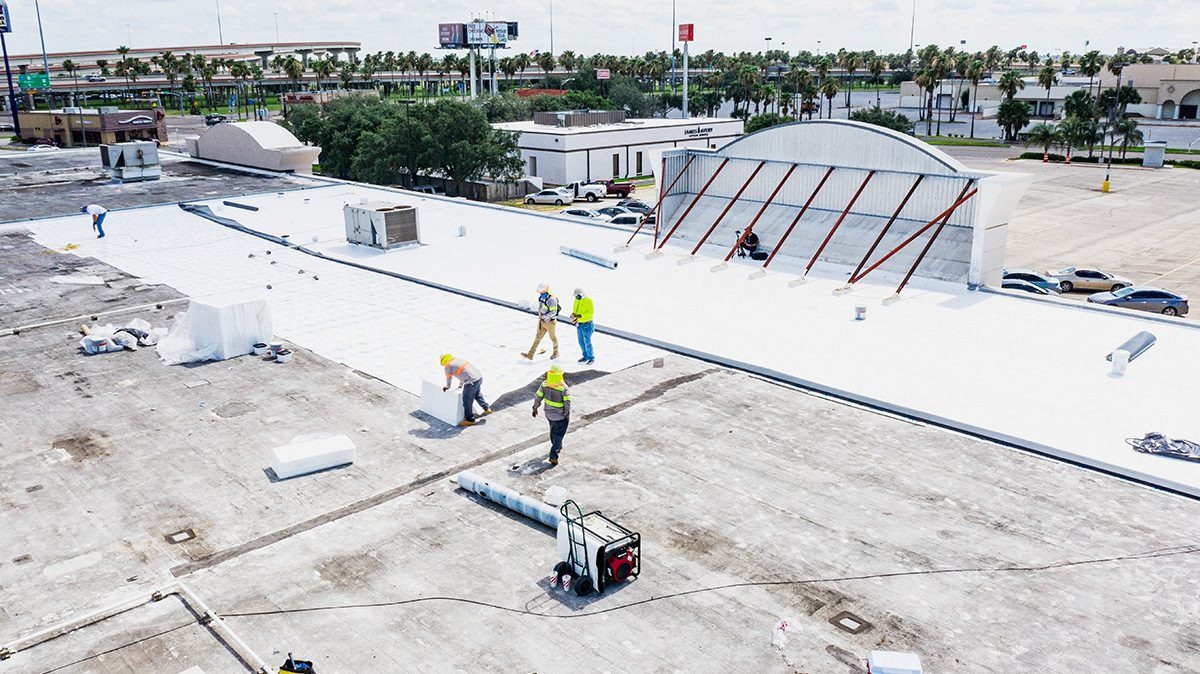
Commercial Roof Condition Reporting — Minneapolis
A verbal roof assessment is not a condition report. A condition report is a written document with a standardized score, a keyed zone diagram, photographs at every noted condition, and a written recommendation that the building owner can file, share, and reference years later.
Commercial roof condition reports in the Minneapolis market are requested for three main reasons: capital planning and reserve budgeting, property acquisition due diligence, and insurance documentation after storm events. Each purpose requires a different emphasis in the report structure, but all three require the same foundation — an accurate, documented, photo-supported description of the roof's current state.
We write condition reports that are useful to the people who will actually work with them: asset managers building capital reserve schedules, attorneys doing real estate due diligence, insurance adjusters reviewing storm damage claims, and lenders underwriting commercial mortgages. The report format is standardized — not a free-form contractor narrative that means something different depending on who wrote it.
Minneapolis roofs generate specific condition reporting challenges that warmer-climate protocols do not address. Post-winter inspection reports need to document ice jacking damage at parapet flashings — a condition that appears in spring and heals partially by summer without ever being repaired, leaving the flashing weakened for the next freeze cycle. Snow load evidence — membrane wrinkling at drift zones, drain saddle compression, parapet deflection — needs to be photographed and recorded in the spring window before thermal expansion cycles redistribute the evidence. Our inspection scheduling and report protocols are focused on these seasonal evidence windows.
Report Structure and Deliverables
Every condition report begins with a roof zone diagram — a dimensioned plan view of the roof that zones the surface into labeled areas (typically A through G or more depending on roof complexity), keyed to the inspection photographs. This diagram is the navigation tool for the rest of the report. Photograph references are keyed to zone labels so that the reader can locate every photographed condition on the diagram without trying to interpret directional descriptions like 'near the northwest parapet'.
The condition narrative covers: membrane type and estimated installation year, current membrane surface condition with specific noted defects by zone, drain and scupper condition including debris accumulation and functional test results where accessible, flashing condition at all parapets and penetrations, moisture assessment results (core pull locations and readings, or electronic probe results where applicable), and any evidence of prior repair work. Prior repairs are documented because they affect service life estimates and warranty status.
The condition score is assigned on a standardized scale — we use a 1-to-10 scale where 10 is new construction and 1 is immediate replacement required. The score is calibrated to the membrane type and age, not to a generic absolute standard. A 20-year-old modified bitumen roof scoring 6 means something different from a 20-year-old TPO scoring 6; the report notes which scoring context applies.
The recommendation section is a plain-language statement of what we recommend and on what timeline — immediate repair, planned repair within 12 months, recover within three to five years, replacement within five to ten years, or no action beyond routine maintenance. We do not write conditional recommendations designed to hedge — we write what the evidence supports.
Insurance and Transaction Documentation
Post-storm condition reports for insurance purposes require additional documentation standards beyond the standard condition report. We distinguish clearly between pre-existing wear conditions and event-related damage. Pre-existing conditions are noted with supporting context — granule loss at seams that predates the storm, flashing cracks that show weathering inconsistent with a recent event. Event-related damage is documented with hail impact measurements, wind uplift evidence, and before-versus-after comparisons where prior inspection records exist. This distinction is the most contested element in commercial roof insurance claims and we document it to the standard that adjusters require.
Pre-acquisition reports for property transactions in Minneapolis — particularly for the North Loop office and loft inventory, the Uptown mixed-use market, and the Eden Prairie and Bloomington corporate real estate market — are structured to answer the buyer's questions directly: what is the roof's current condition, what will it cost to replace, and when is the replacement likely to be needed. We produce these reports independent of any broker, seller, or buyer relationship.
How long does it take to receive a written condition report after the inspection?
Standard turnaround is five business days from the inspection walk. For post-storm insurance documentation where time is material to claim filing, we can deliver within 48 hours. Pre-acquisition reports for pending transactions can be expedited to
Can you provide a condition report on a roof you did not install?
Yes. The condition report is an independent assessment of current condition. We report what we find regardless of who installed the roof or made prior repairs. Our only relationship in a condition report engagement is with the party who commissioned the report.
Do you use any technology tools — drones, infrared cameras — in condition reporting?
Infrared scanning is a separate capability we offer for moisture detection — it is most useful on roofs where we suspect significant insulation saturation but want to map the extent before pulling cores. Standard condition reports rely on visual inspection and selective core pulls. When a roof's size or condition complexity warrants infrared scanning, we recommend it as an addition to the baseline inspection and report.
Commission a written condition report for your Minneapolis building.
We will inspect the roof, assign a standardized condition score, photograph every noted condition keyed to a zone diagram, and deliver a written report within five business days.
- Life Cycle Cost Analysis
- Roof Asset Management
- Moisture Survey Services
- Competitive Bid Coordination
- Procurement Support
- Roof Replacement Planning
- University Campus Roofing
- Commercial Roof Maintenance