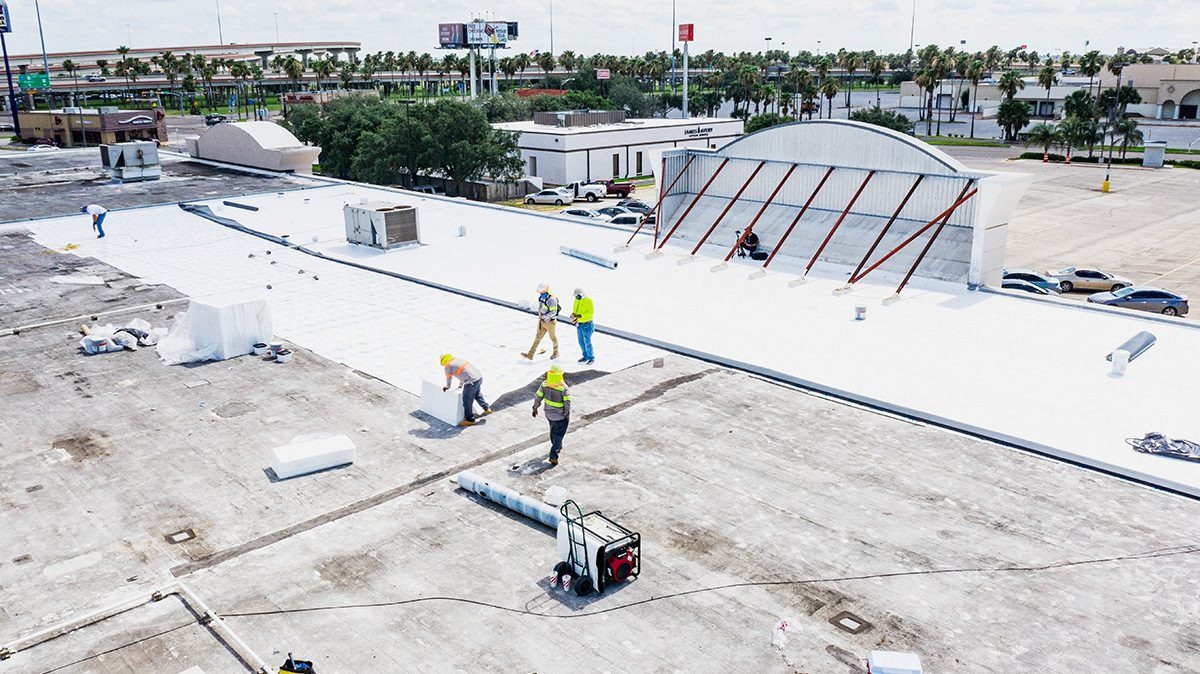
Commercial Roof Insurance Claim Documentation Minneapolis MN
What a complete commercial roof insurance documentation package contains
A complete roof insurance documentation package for a Minneapolis commercial building contains seven elements: a dated photo log organized by roof zone with reference points; a roof zone diagram showing the building footprint, drain locations, penetrations, and zone boundaries; measured damage areas by zone in square feet corresponding to the photo log; material takeoffs specifying affected membrane type, thickness, and manufacturer; a damage narrative describing the weather event, the damage mechanism, and the relationship between the event and the observed damage; NWS or NOAA weather data confirming the event date, intensity, and location; and a scope-of-repair line item list in Xactimate-compatible format.
The weather data element is particularly important for Minneapolis-area claims. The NWS Twin Cities office in Chanhassen maintains archived storm reports for Hennepin, Ramsey, Anoka, and surrounding counties — these reports confirm hail diameter, wind speed, tornado confirmation, and event dates for every recorded severe weather occurrence. We retrieve and include the relevant NWS Storm Data entries for every weather-related claim we document. For the May 2024 derecho, for example, the Chanhassen office recorded peak gusts at 14 official monitoring stations across the metro — that data is part of every wind damage claim package we produced for that event.
Photo log organization matters as much as photo count. Photos organized by roof zone and cross-referenced to the zone diagram allow the adjuster to match each photo to a specific roof location. We use a naming convention that includes date, zone designation, and sequence number for every photo in the claim package.
Supplement documentation when initial insurance estimates are low
Initial insurance estimates on Minneapolis commercial roof claims are frequently low — not because of bad faith, but because the adjuster is working from limited roof access, conservative unit costs, or an estimate produced before the full damage extent was determined. The supplement process allows building owners to submit additional documentation supporting a higher claim value.
We prepare supplement documentation when the repair scope we have written materially exceeds the initial insurance estimate. The supplement package includes the original claim documentation plus an explanation of items that were missed or undervalued in the initial estimate, supporting documentation for each supplemental item, and a revised line-item scope in Xactimate format.
Common supplement items on Minneapolis commercial roof claims: interior water damage documentation for damage not visible during the initial adjuster inspection but documented at the time of repair; wet insulation replacement that was not included in the initial estimate (and that requires infrared scan data to establish scope); drain body replacement resulting from ice-related cracking that was not identified until the membrane was opened; and edge metal replacement to current ANSI/SPRI ES-1 standard — a code-compliant upgrade required by the repair that was not in the original estimate.
How Minneapolis storm events affect documentation requirements
The May 2024 derecho created a documentation challenge specific to its track: it affected the full Minneapolis commercial inventory from the Southwest suburbs through the urban core to Northeast Minneapolis, and it produced two distinct damage periods separated by approximately 40 minutes — the leading edge of the storm and the trailing convective cells. Buildings in the storm track received damage from both periods, and the damage from the trailing cells was sometimes on the opposite roof elevation from the leading-edge damage. We documented this two-period pattern in the damage narratives for every May 2024 claim we supported.
Minneapolis ice storm and snow load claims carry an additional documentation requirement: establishing that the accumulation event exceeded design load thresholds. We include engineered snow load calculations — based on measured snow depth and density converted to pounds per square foot — in snow load damage documentation packages. This calculation, compared to the building's design load from the structural drawings, establishes that the event produced conditions outside the design envelope. That comparison is what moves the claim from a disputed maintenance claim to a covered storm event.
Do you represent building owners in the insurance claim process?
No. We are not public adjusters and do not represent insureds in coverage negotiations. We provide factual documentation — photo logs, measured scopes, weather data, Xactimate line items — and allow the adjuster to make coverage determinations. If a claim is disputed, building owners who need representation in the claim process should engage a licensed public adjuster. We provide the technical documentation that supports that process.
How long does the claim documentation process take?
For a single-event storm damage claim on a building up to 50,000 square feet, we typically complete the inspection, photo log, measured scope, and Xactimate format line items within five to seven business days of the roof walk. Infrared scanning for wet insulation mapping adds two to three business days. Structural assessment requiring coordination with a licensed structural engineer adds the engineer's timeline, typically one to two weeks.
What Minneapolis-area storm events can you document for historical claims?
We can document damage from any event for which NWS Chanhassen records exist — the Storm Data publication goes back multiple years and records hail diameter, wind speed, tornado tracks, and snow totals for every significant event in the Twin Cities metro. The documentation challenge for historical claims is establishing that the current damage resulted from the specific event rather than from prior damage or deferred maintenance. A dated inspection that examines both event-related damage and pre-existing condition is the correct approach.
Insurance claim documentation for Minneapolis commercial roof damage.
- Hail Damage Roof Repair
- Tornado Damage Roof Repair
- Leak Damage Roof Repair
- Water Damage Roof Repair
- Fire Damage Roof Repair
- Drone Roof Inspection
- Roof Leak Repair
- School Roofing