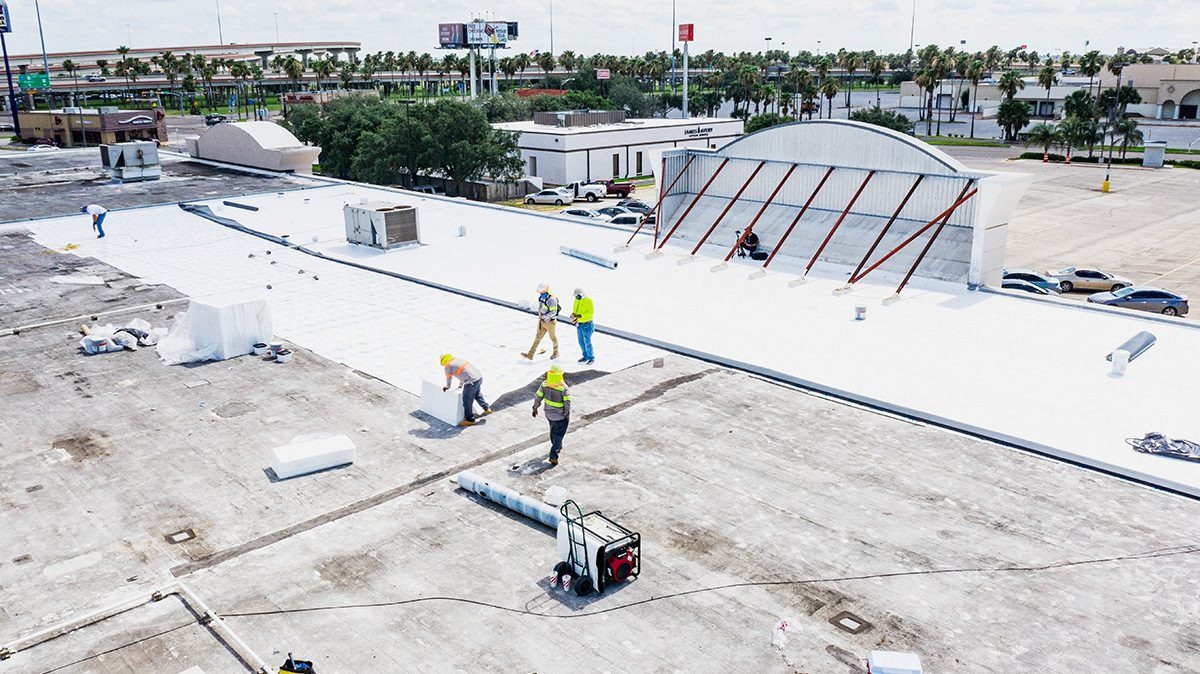
Data Center Roofing in Minneapolis, MN
Data center roofing for colocation facilities, server rooms, and mission-critical buildings throughout Minneapolis, MN.
Minneapolis-Saint Paul is a major corporate data center hub headlined by some of the most recognizable retail and consumer brands in North America. Target Corporation's headquarters data center supports one of the country's largest retail IT platforms, managing inventory, supply chain, payments, and customer analytics for operations spanning thousands of stores and a massive e-commerce presence. Best Buy's corporate computing infrastructure in the Twin Cities handles electronics retail operations at a scale that demands high-availability server environments. Minneapolis-Saint Paul International Airport operates data infrastructure supporting airline operations, security systems, and passenger services that cannot tolerate interruption. These flagship facilities have established a regional standard for data center building envelope performance that commercial roofing contractors must meet to compete in this market.
Minneapolis has one of the most demanding cold-climate roofing environments in the contiguous United States. The city averages over 54 inches of annual snowfall and regularly experiences temperatures below -20°F during winter cold snaps, creating thermal differentials across roof assemblies that place extreme stress on membrane flexibility, adhesive performance, and seam integrity. Ground snow load values for Minneapolis are among the highest of any major US metro area, and when accumulated snow combines with rooftop mechanical equipment common to data centers — cooling towers, precision air conditioning units, UPS battery rooms — roof structural loads can approach or exceed design values during severe winter events.
The vapor drive dynamics in Minneapolis data center roofing are extreme. Interior data center environments maintained at 68–75°F and 40–60% relative humidity create very high vapor pressure relative to winter exteriors that may be at -10°F or colder. This dramatic pressure differential drives moisture aggressively through any gap in the vapor retarder toward the cold exterior, where it condenses within the insulation assembly. Polyisocyanurate insulation, standard in Minnesota data center construction, is particularly vulnerable to moisture degradation — wet polyiso can lose 30–50% of its effective R-value, triggering a cascade effect where degraded insulation requires mechanical systems to work harder to maintain temperature setpoints, accelerating insulation degradation further.
Target's IT operations represent a direct connection between roofing performance and retail business continuity. Target's 2013 data breach — now a landmark case in cybersecurity history — transformed how the company and its peers approach data center physical security and operational continuity. The physical building envelope is part of that operational security picture: a roof failure that introduces moisture into server infrastructure during a peak retail period like Q4 carries business consequences that extend well beyond repair costs. Target's facilities standards reflect this heightened awareness, and contractors who serve their campus understand that documentation, access controls, and rapid response capability are as important as installation quality.
Best Buy's corporate computing in the Twin Cities faces similar operational stakes. Their e-commerce platform and inventory systems serve millions of consumers shopping across physical and digital channels, and system downtime during peak periods — particularly holiday shopping season, which falls squarely in Minnesota's most severe weather window — creates direct revenue loss at measurable per-minute rates. The coincidence of Minnesota's worst roofing weather with retail's highest-stakes operational period makes proactive roofing maintenance in this market not merely prudent but strategically essential for data center operators serving retail clients.
TPO single-ply roofing dominates new data center construction in Minneapolis, but installation in cold climates requires attention to details that differ from southern or moderate-climate practice. TPO membranes must be installed at acceptable temperature ranges for adhesive performance, seam welding quality must be verified throughout the installation process since cold conditions affect weld quality, and finished membranes should be probe-tested 100% of field seams before the roof is placed back in service. EPDM remains a viable alternative, particularly in re-roofing applications, because of its proven cold-temperature flexibility and decades-long track record in Minnesota's climate. Selecting between these systems requires weighing installation season, available budget, and long-term performance expectations for each specific facility.
The MSP airport data infrastructure creates a specialized roofing environment where FAA operational continuity requirements overlay standard data center roofing standards. Airport facilities must maintain uninterrupted operation of navigation, communications, and passenger systems regardless of weather conditions, which means roofing maintenance and replacement work at airport-adjacent facilities must be coordinated with aviation operations in ways that standard commercial projects do not require. Contractors who understand aviation facility constraints — access restrictions, noise limitations, schedule coordination with operational departments — have an advantage in this specialized segment of the Minneapolis data center roofing market.
Energy code compliance in Minnesota is among the most stringent in the US, reflecting the state's cold climate and long heating season. The Minnesota Energy Code requires continuous insulation values that typically exceed R-30 for new commercial low-slope roofing, and data center operators often specify higher values to achieve the operational energy efficiency their business models require. Verifying that specified R-values are achieved in field conditions — not just on paper — requires proper installation oversight, since compressed or saturated insulation does not deliver its rated performance. Third-party inspection of insulation installation is standard practice for sophisticated data center clients in Minneapolis.
General Mills and other major food and consumer products companies headquartered in the Twin Cities contribute to the region's data center demand through corporate computing infrastructure that manages global supply chains, R&D systems, and financial operations. These corporate clients operate on fiscal year cycles that create project planning windows for roofing work — typically late spring through early fall in Minneapolis — and contractors who can efficiently mobilize large crews for short-season work are well positioned to capture this demand. The work must be completed during a compressed window before winter conditions make large-scale roofing impractical.
Commercial roofing contractors serving Minneapolis's data center market need to demonstrate cold-climate technical competency that goes beyond standard certification programs. This means documented experience with low-temperature membrane installation, understanding of freeze-thaw membrane dynamics, familiarity with Minnesota's energy code requirements for commercial roofing, and service program structures that can respond to weather events during the February cold snaps when other contractors are unavailable. Building these capabilities requires investment, but the Minneapolis data center market rewards contractors who can perform reliably in conditions that test the limits of materials and crews alike.
Frequently Asked Questions: Data Center Roofing in Minneapolis, MN
How do you satisfy a food safety audit for roofing contractor work?
We implement a documented food-safety protocol that includes: daily magnetic fastener sweeps with a log provided to the food safety coordinator, HVAC intake protection installed before tear-off begins, low-VOC adhesive and primer selection reviewed with EHS before specification finalization, and a daily cleanup inspection with photographic documentation. This protocol is designed to satisfy the documentation requirements of a GFSI-aligned food safety audit.
Do you have experience with the Cargill or General Mills vendor qualification process?
Can torch-applied modified bitumen be used on a grain storage facility?
Generally no. OSHA NFPA 654 and 61 govern hot-work requirements in facilities where combustible grain dust creates an explosion risk. We review the facility's hazard classification and the specific building's grain dust exposure before specifying any adhesive system. For grain storage facilities where hot-work is restricted, we specify mechanically attached or cold-applied fully-adhered single-ply systems that achieve equivalent waterproofing performance without open flame.
Get a roofing scope for your food or agribusiness facility.
Our project managers will walk the roof, review food-safety protocol requirements with your EHS team, and deliver a written scope with material specifications and debris-containment plans that satisfy your food safety program.
- Agricultural Food Roofing
- Food Processing Cold Storage
- DST Roofing
- Retail Roofing
- Tech Roofing
- Commercial Reroofing
- Single Ply Roofing
- Capital Planning Support