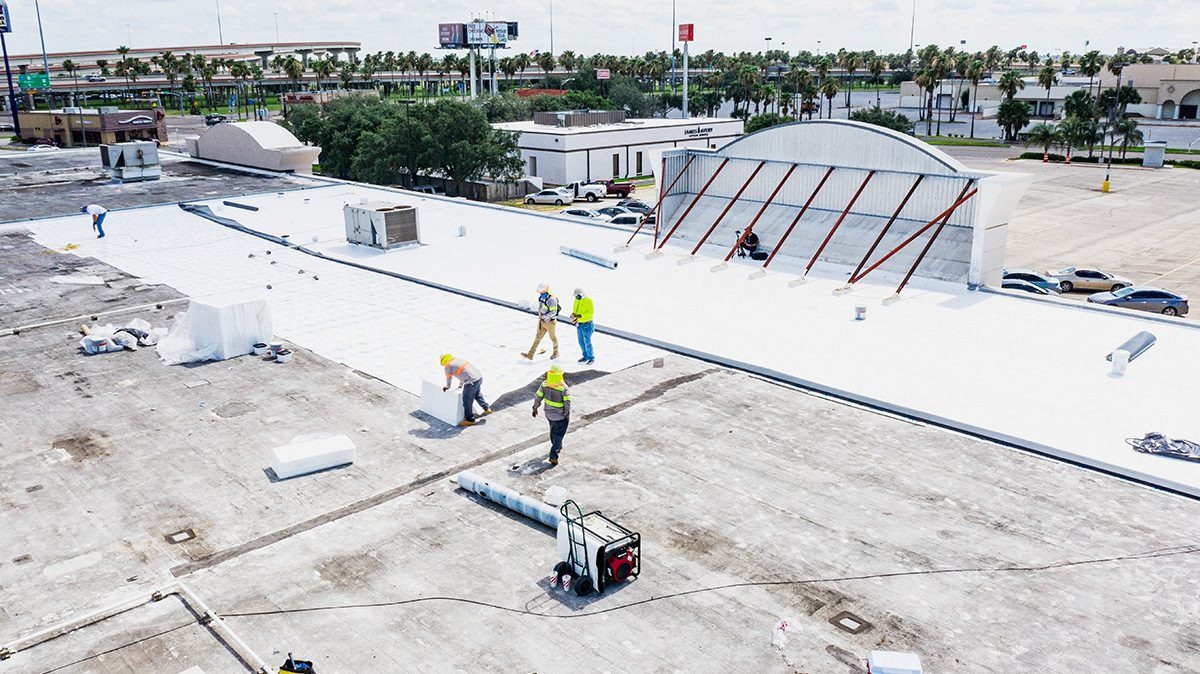
Roof Replacement Planning in Minneapolis, MN
A Minneapolis commercial roof replacement scoped in advance — with moisture surveys, snow load analysis, drain review, and a written specification before a contractor is ever bid — is a fundamentally different project from one scoped reactively after a leak in March.
Most Minneapolis commercial roof replacements are scoped badly, and the bad scope is not the contractor's fault. It is the result of a reactive process: the roof leaks, the building owner calls three contractors for bids, the contractors walk the roof for an hour and price a system, and the lowest bid wins on a specification that is vague enough to mean almost anything during execution. The replacement runs, the warranty paperwork arrives, and three winters later the ice dams are back because no one changed the insulation R-value, the drain locations, or the parapet flashing detail that caused the original failure.
We offer roof replacement planning as a distinct service — separate from the construction contract — for Minneapolis building owners and facility managers who want to understand what their building actually needs before they solicit bids. The output is a written scope document: moisture survey results, deck condition assessment, snow load analysis cross-referenced against the building's structural design load, insulation specification with R-value justification under current Minnesota energy code, membrane specification with manufacturer warranty path identified, drain configuration review, and a project schedule that accounts for Minneapolis weather windows and permit lead times.
A written scope document changes how bids come in. When every contractor is bidding against the same specification — the same insulation specification, the same membrane type, the same drain replacement scope, the same warranty requirement — the price comparison is apples to apples. Building owners in the Loring Park area near downtown Minneapolis, in the medical office cluster south of Nicollet Mall near HCMC, and in the Marcy-Holmes neighborhood near the University of Minnesota campus have used our pre-project scoping to run competitive bids that produced meaningful comparisons rather than bids that differed in scope as much as price.
Components of a Minneapolis Roof Replacement Scope
Moisture survey and core sampling: We pull cores in a representative grid and document moisture content in each core. The moisture survey determines the extent of insulation replacement required and identifies any deck areas that need inspection or repair. For Minneapolis buildings with original 1970s–1980s BUR systems, we also conduct a preliminary asbestos assessment to flag whether an asbestos survey is required before the replacement project begins.
Snow load and drainage analysis: We review the roof's drainage plan against the applicable ground snow load (35 psf for Minneapolis proper, 40 psf for some suburban jurisdictions) and identify any drainage deficiencies that need to be corrected in the replacement scope. Drain locations that were adequate for the original roof slope may be inadequate if the replacement insulation changes the slope configuration. We document the drain coverage area for each drain and flag any areas where the slope-to-drain path is inadequate.
Insulation specification: We calculate the insulation R-value required to meet current Minnesota State Energy Code minimums (R-30 for low-slope commercial) and specify the insulation type, thickness, and attachment method appropriate for the building's structural system. For buildings where added insulation would raise the roof surface above the top of the existing parapet — a common condition on older Minneapolis buildings — we document the parapet height issue and include options for parapet extensions or alternative insulation configurations.
Manufacturer warranty path: We identify which manufacturer warranty programs the building qualifies for based on building type, roof area, project scope, and the owner's long-term hold strategy. Not every Minneapolis commercial building qualifies for every warranty program — some programs require minimum project sizes, specific membrane thicknesses, or third-party inspections at specified milestones. We document the warranty requirements so that the selected contractor knows exactly what is required at closeout.
Timing the Minneapolis Replacement Project
Minneapolis roofing weather windows are real constraints, not contractor excuses. The optimal installation window for most membrane systems is April 15 through October 31 — substrate temperatures are reliably above adhesive minimums, precipitation is manageable, and the production schedule can be planned without daily weather holds. November through March projects require cold-weather materials, slower production rates, and daily forecast monitoring — factors that add 20–30% to production cost and extend the schedule.
Permit lead times with the City of Minneapolis Building Inspections division run 2–4 weeks for commercial roofing permits under standard review. Projects that trigger plan review — due to structural modifications, energy code upgrades, or scope complexity — can run 4–8 weeks. We identify permit requirements and likely review timelines as part of the planning scope so that the project start date is realistic, not optimistic.
Manufacturer material lead times have extended significantly and remain variable in 2026. Some TPO and polyiso products have 4–6 week lead times from order to delivery on the Twin Cities market. We identify the critical-path materials in the scope document and recommend ordering windows that account for current lead times. Building owners who want a June installation start need to be in the ordering process by April — that sequencing is part of the planning output.
Using the Scope Document to Run Competitive Bids
A written scope document transforms the bid process from a three-contractor walk-and-price exercise into a genuine comparison. Every contractor bidding against the same written specification — same membrane type, same insulation thickness, same drain replacement scope, same warranty requirement, same closeout documentation requirement — produces a bid that can be compared line by line. The building owner can see where contractors differ on labor rate, material supplier, and overhead — not on scope interpretation.
We do not participate in the bid for projects where we provided the planning scope. Our planning work produces a specification and a cost estimate range; the construction contract goes to the contractor the owner selects from the competitive bid. This structure keeps our planning advice objective — we have no financial interest in which membrane type or insulation specification wins the design comparison, because we are not selling the materials or the installation labor.
Bid review is available as an add-on service for building owners who want a second set of eyes on the bids they receive. We review each bid against the written scope for scope completeness, warranty compliance, and schedule realism — flagging bids that appear to have omitted scope items or proposed warranty terms that do not match the specification. Minneapolis building owners have used this service to catch bid-level scope omissions that would have become change-order disputes during construction.
How much does roof replacement planning cost in Minneapolis?
Our planning scope fees are based on roof area and project complexity — typically $2,500–$8,000 for most Minneapolis commercial buildings. That fee is separate from and not credited toward any subsequent construction contract. Building owners who use the planning service report that the competitive bid savings on the construction contract — from better-specified bids that do not inflate for scope uncertainty — typically exceed the planning fee on projects above 30,000 sq ft. We discuss fee structure at the first conversation so there are no surprises.
Can you help with a roof replacement that was scoped by another contractor?
Yes. We review existing scope documents and specifications for Minneapolis commercial roof projects and provide a written assessment of scope completeness, code compliance, and warranty path accuracy. This is useful for building owners who have received a scope from a contractor they want to hire but want a second opinion on the technical specification before signing the contract.
What is included in the closeout documentation you specify?
The closeout package we specify includes: manufacturer warranty document, photo-keyed roof zone diagram showing all drains, penetrations, seams, and repair areas, snow load documentation for the completed assembly, maintenance specification with annual inspection requirements, material certifications and test reports, permit closeout documentation from the City of Minneapolis or applicable municipality, and manufacturer start-up documentation. This package is what the building's next owner or lender will ask for — and it is also what keeps the manufacturer warranty intact when a future maintenance crew needs to do repair work.
Start your Minneapolis roof replacement with a written scope.
Our project managers will assess the building, conduct the moisture survey, analyze snow loads and drainage, and deliver a written specification you can bid competitively — before you commit to a contractor.
- Commercial Roof Repair
- Infrared Moisture Scanning
- Silicone Roof Coating
- Manufacturing Facility Roofing
- Retail Roofing
- Commercial Roof Coatings
- Mixed Use Roofing
- About