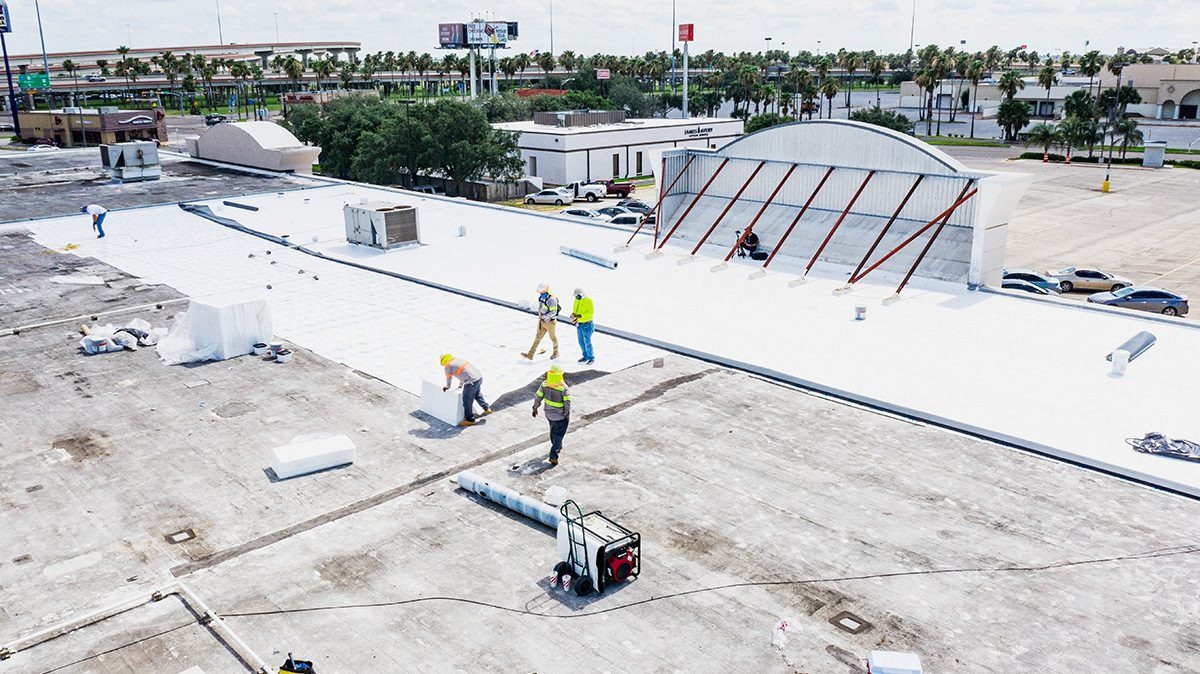
Manufacturing Facility Roofing in Minneapolis, MN
Commercial roofing for manufacturing plants, assembly facilities, and industrial buildings throughout Minneapolis, MN.
3M's global headquarters and manufacturing complex in Maplewood — adjacent to Minneapolis — and Honeywell's Resins and Chemicals operations along with a network of precision medical device manufacturers, industrial technology companies, and food processing operations anchor Minneapolis's manufacturing roofing market. The Twin Cities metro area has one of the most diverse and technically sophisticated manufacturing bases in the United States, and the commercial roofing contractors who serve it must navigate process-specific chemical exposures, extraordinary weather demands, and the scheduling constraints of facilities that supply global markets.
Process equipment on 3M's manufacturing and R&D campus represents some of the most specialized rooftop mechanical installations in the country. Specialty chemical production, adhesive manufacturing, and abrasive product processing all require dedicated exhaust and ventilation systems whose rooftop components are engineered for specific chemical tolerances. Contractors working on 3M facilities participate in pre-project chemical hazard reviews and must verify that all proposed roofing materials — including primers, adhesives, and sealants — are compatible with the chemical substances handled in the production areas below the roof zone.
Chemical fume and vapor exposure at Minneapolis's 3M and specialty chemical manufacturing facilities exceeds what most commercial roofing contractors encounter in general commercial work. Fluorochemicals, specialty adhesive solvents, and industrial cleaning compounds are among the substances whose vapors reach rooftop exhaust points at Twin Cities manufacturing facilities. Contractors who have established relationships with major Minneapolis manufacturers maintain chemical compatibility matrices that expedite membrane selection on new projects, rather than requiring from-scratch research on each specification cycle.
Vibration from Minneapolis's precision manufacturing facilities ranges from the low-level, high-frequency vibration of CNC machining centers to the higher-amplitude, lower-frequency vibration of large stamping presses and hydraulic forming equipment. Honeywell's specialty materials operations include manufacturing processes that produce persistent vibration loads on the roof structure above. Membrane fastening systems at these locations are reviewed by structural engineers who have access to measured vibration data rather than relying on prescriptive code tables that were not developed with manufacturing vibration loads in mind.
Skylights on Minneapolis manufacturing facilities are specified with extreme climate performance in mind. The combination of indoor-outdoor temperature differences that can exceed 80°F during Minnesota winters and the summer UV exposure of the northern latitude creates thermal and radiation stresses on skylight assemblies that require specific glazing and frame specifications. Polycarbonate systems with multi-wall construction and UV-blocking coatings perform better in Minneapolis's climate than single-wall acrylic alternatives. Skylight curb designs must also accommodate Minnesota's substantial snow loads without allowing snow accumulation to compromise the curb-to-membrane seal.
Schedule coordination at Minneapolis manufacturing facilities is constrained by Minnesota's compressed outdoor construction season even more than in other northern markets. The Twin Cities' latitude means that sub-freezing temperatures can arrive as early as October and persist into April, limiting adhesive and sealant application to a roughly six-month window in most years. Major roofing projects at facilities like 3M's Maplewood campus must be planned and contracted in winter to secure contractor capacity for the following construction season. Facilities managers who wait until spring to begin contractor selection routinely find that experienced contractors are already fully committed for the coming season.
Minnesota's winter weather creates roofing structural challenges that go beyond most other U.S. markets. Ground snow loads in the Minneapolis area are among the highest in the continental United States, and flat industrial rooftops that develop ponding areas can accumulate ice loads during spring freeze-thaw cycles that approach the structural limits of the deck. Contractors working on Minneapolis industrial facilities specify tapered insulation assemblies that establish positive drainage across the entire roof area, with secondary overflow provisions sized for worst-case spring ice melt scenarios. Neglecting positive drainage design on a Minneapolis industrial roof is an error that produces consequences within the first few winters of service.
Honeywell's manufacturing operations in the Twin Cities metro benefit from the same sophisticated approach to facilities management that characterizes the company's engineering culture broadly. Roof asset management programs at Honeywell facilities typically include thermographic surveys, condition assessment protocols, and capital replacement planning horizons of 10 to 15 years. These programs enable the facilities management team to present roofing capital needs to corporate real estate management with the documentation and predictability that corporate planners require, rather than appearing with emergency replacement requests that create budget disruptions.
Minneapolis's position as a hub for medical device manufacturing — with companies like Medtronic, Boston Scientific, and St. Jude Medical all maintaining production operations in the metro — creates a specialized roofing demand for cleanroom-adjacent and ISO-classified manufacturing environments. Rooftop penetrations into these spaces require pressure boundary integrity, contamination controls during construction, and construction documentation sufficient to support the facility's quality management system records. Contractors who have established competency in medical device manufacturing facility roofing work command a premium in the Minneapolis market that reflects the genuine expertise required.
How do I know if my Minneapolis BUR roof needs repair or full replacement?
The decision turns on moisture saturation in the insulation layer. If core sampling shows wet insulation in more than 25% of the roof area, replacement is typically more cost-effective than recover — saturated insulation has to be removed regardless, and at that percentage the removal and disposal cost closes the gap between recover and replacement. If wet areas are under 25%, we cut out the wet insulation, replace it, and recover the system. We document every core pull and give you the data to make the decision — we do not make a replace recommendation on surface condition alone.
Can you work on BUR roofs in Minneapolis winters?
Repair and maintenance work on BUR systems can be done in winter with appropriate materials — modified bitumen torch patches, cold-applied sheet materials rated for cold-temperature application, and peel-and-stick flashing products that maintain bond at low temperatures. Hot-mop BUR installation (new multi-ply systems installed with a kettle and hot bitumen) requires substrate temperatures above the minimum specified by the bitumen manufacturer — typically 40°F for the substrate, not ambient — which limits full-system installation to the warmer months. Emergency dry-in work in winter uses temporary materials that are replaced when conditions allow.
Does working on an existing BUR system require special disposal procedures?
Older BUR systems — particularly those installed before 1975 — may contain asbestos-containing materials in the ply felts or the bitumen compound. We require an asbestos survey prior to any core sampling or tear-off on BUR systems that predate 1975. The survey is the building owner's responsibility, but we can coordinate with qualified industrial hygienists in the Minneapolis market. Asbestos-containing BUR systems require abatement by a licensed asbestos contractor before roofing work proceeds — this adds time and cost to the project scope and needs to be in the project plan before contract signing.
Get a BUR assessment for your Minneapolis commercial building.
Our project managers will inspect the system, pull moisture cores at suspect locations, document the condition, and give you a written report that separates repair from recover from replacement — with the data to back it up.
- Storm Damage Roof Repair
- Modified Bitumen Roofing
- Expansion Joint Repair
- Industrial Roofing
- Restaurant Roofing
- Snow Load Roof Design
- Multifamily Roofing
- About