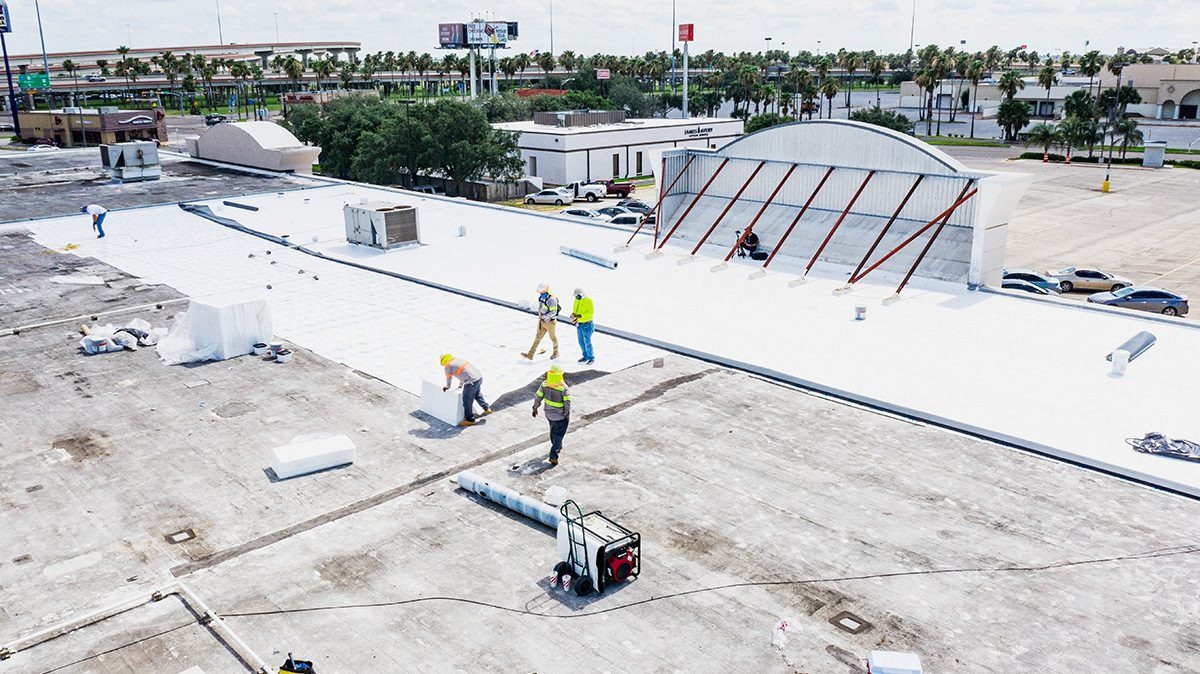
Healthcare Facility Roofing in Minneapolis, MN
Commercial roofing for hospitals, medical office buildings, surgical centers, and healthcare facilities throughout Minneapolis, MN.
Minneapolis sits at the center of one of the most concentrated healthcare research and delivery ecosystems in North America. Mayo Clinic's Rochester campus, 90 miles to the southeast, casts a long shadow over the Twin Cities market but also drives substantial referral volume into the Minneapolis medical corridor. M Health Fairview's flagship University of Minnesota Medical Center anchors the academic medical enterprise in Minneapolis proper, while Hennepin Healthcare — operating Hennepin County Medical Center — serves as the region's Level I trauma center and safety-net hospital. Allina Health, HealthPartners, and Essentia Health collectively operate a dense network of hospitals and clinics across the metro. Abbott Northwestern Hospital in Minneapolis and United Hospital in St. Paul are the major private hospital anchors on either side of the Mississippi, and the suburban medical corridors in Plymouth, Eden Prairie, and Eagan reflect the ongoing outpatient care decentralization that every major Minnesota health system is pursuing. This breadth of healthcare real estate creates a roofing services market that demands both technical sophistication and operational experience with the specific demands of clinical facilities.
Minnesota's climate creates what is arguably the most technically demanding roofing environment in the continental United States. Minneapolis experiences average January high temperatures of 23 degrees Fahrenheit, with lows that regularly reach minus 20 during polar vortex events, combined with July heat and humidity that push apparent temperatures above 100. This thermal range — spanning over 120 degrees between extreme cold and summer heat — cycles across every material transition in a roofing assembly, and the fatigue it generates over years of operation is the primary driver of premature failure on TPO, modified bitumen, and built-up systems alike. The structural snow load requirements in Minneapolis are substantial, with ground snow loads requiring design values that healthcare facility engineers must explicitly account for, and ice damming at parapet edges is a persistent winter maintenance challenge that can force emergency responses on occupied hospital campuses.
Snow and ice management is an active, ongoing operational obligation for Minneapolis healthcare facility teams in a way that has no parallel in warmer markets. Hennepin Healthcare's facilities team, the M Health Fairview maintenance operations group, and Allina Health's property management organization all maintain winter protocols that include roof snow load monitoring, pre-qualified contractor lists for emergency snow removal, and internal communication procedures for activating those contractors when load thresholds are reached. Roofing contractors who provide these services for hospital campuses in Minneapolis must hold current access credentials at each facility, carry the insurance levels that hospital risk management programs require, and be capable of mobilizing crews safely in the sub-zero conditions that may accompany a snow load emergency.
Ice damming at parapet edges is a specific winter roofing challenge that Minneapolis healthcare facilities address through a combination of design and maintenance approaches. When heat escapes through the roof assembly and melts accumulated snow, the meltwater migrates toward the colder parapet edge where it refreezes, building up an ice dam that can force water back under laps and into the building. Proper above-deck insulation levels, which reduce the heat flux through the assembly, are the most effective design countermeasure. Heat-traced primary roof drains and overflow provisions at the parapet prevent blockage during refreezing events. These design elements are not optional for Minneapolis healthcare buildings — they are the difference between managing winter operations normally and responding to ceiling leak emergencies at 3 a.m. in February.
The research laboratory and biocontainment environments at the University of Minnesota Medical Center and the affiliated research institutes create building envelope requirements that go beyond standard clinical care spaces. Laboratory buildings where precise pressure differentials are maintained between spaces require roofing assemblies that do not contribute to uncontrolled air infiltration. Any roofing deficiency that compromises the sealed envelope of a research building can disrupt experimental conditions, create contamination risks in adjacent clean areas, and in extreme cases affect the containment of biohazardous materials. Contractors working on M Health Fairview's research building roofs complete orientation programs specific to the research environment before accessing these facilities.
Abbott Northwestern Hospital's position in the Minneapolis healthcare market — as a major cardiovascular surgery and interventional cardiology center serving patients from across the upper Midwest — gives its roofing program particular urgency. The hybrid operating rooms and cardiac catheterization labs that drive Abbott Northwestern's clinical reputation require absolute sterile field integrity, and any roofing failure above these spaces produces immediate clinical consequences. Allina Health's facilities team manages Abbott Northwestern's roofing program through a combination of annual infrared moisture surveys, documented penetration inspections at every HVAC and medical gas curb, and a pre-qualified contractor relationship that provides 24-hour emergency response capability when unexpected failures require immediate attention.
Medical office development in the Minneapolis suburban market has concentrated in the Golden Valley and Plymouth corridors serving north Minneapolis, in Bloomington and Eden Prairie along the I-494 strip, and in the eastern suburbs around Woodbury and Maplewood. These buildings serve the HealthPartners, Allina, and Fairview ambulatory networks and are frequently occupied by high-volume specialty practices whose procedure-capable exam rooms and minor surgery suites require clinical-grade roofing standards. New medical office construction in Minneapolis's snow zone requires structural designs that accommodate the roof assembly weight — both dead load from the roofing system itself and the live snow load — while maintaining the membrane and insulation specifications appropriate for the clinical environment below.
Assisted living and memory care development in the Minneapolis metro has tracked the aging of the Baby Boom cohort, with new facilities appearing in virtually every suburban community from Maple Grove to Eagan. These facilities operate in a climate where roofing failure during a Minneapolis winter can result in interior damage that is impossible to address without displacing residents — a consequence that assisted living operators actively work to avoid for both resident welfare and regulatory compliance reasons. The Minnesota Department of Health surveys assisted living facilities and can cite physical plant deficiencies that include water damage evidence, and the reputational consequences of a survey deficiency in a competitive senior living market are felt immediately in occupancy rates and referral patterns from discharge planners.
Roofing contractors serving Minneapolis healthcare facilities must demonstrate competence across the full range of cold-climate roofing challenges: snow load design and emergency removal, ice damming prevention through proper insulation and drainage design, cold-temperature membrane installation protocols that maintain adhesive performance in conditions well below the standard installation temperature minimums, and the clinical-environment operational discipline that hospital campuses require. Contractors who have built their expertise in warmer markets and are expanding north will find that Minneapolis's climate adds requirements to every project scope that their previous experience did not prepare them for. The healthcare facilities organizations at M Health Fairview, Allina Health, and HealthPartners have learned through experience which contractors have this combination of cold-climate and clinical expertise, and their reference networks reflect that institutional knowledge.
How do I know if my Minneapolis BUR roof needs repair or full replacement?
The decision turns on moisture saturation in the insulation layer. If core sampling shows wet insulation in more than 25% of the roof area, replacement is typically more cost-effective than recover — saturated insulation has to be removed regardless, and at that percentage the removal and disposal cost closes the gap between recover and replacement. If wet areas are under 25%, we cut out the wet insulation, replace it, and recover the system. We document every core pull and give you the data to make the decision — we do not make a replace recommendation on surface condition alone.
Can you work on BUR roofs in Minneapolis winters?
Repair and maintenance work on BUR systems can be done in winter with appropriate materials — modified bitumen torch patches, cold-applied sheet materials rated for cold-temperature application, and peel-and-stick flashing products that maintain bond at low temperatures. Hot-mop BUR installation (new multi-ply systems installed with a kettle and hot bitumen) requires substrate temperatures above the minimum specified by the bitumen manufacturer — typically 40°F for the substrate, not ambient — which limits full-system installation to the warmer months. Emergency dry-in work in winter uses temporary materials that are replaced when conditions allow.
Does working on an existing BUR system require special disposal procedures?
Older BUR systems — particularly those installed before 1975 — may contain asbestos-containing materials in the ply felts or the bitumen compound. We require an asbestos survey prior to any core sampling or tear-off on BUR systems that predate 1975. The survey is the building owner's responsibility, but we can coordinate with qualified industrial hygienists in the Minneapolis market. Asbestos-containing BUR systems require abatement by a licensed asbestos contractor before roofing work proceeds — this adds time and cost to the project scope and needs to be in the project plan before contract signing.
Get a BUR assessment for your Minneapolis commercial building.
Our project managers will inspect the system, pull moisture cores at suspect locations, document the condition, and give you a written report that separates repair from recover from replacement — with the data to back it up.
- EPDM Roofing
- Drain Cleaning Repair
- Condition Reporting
- Office Building Roofing
- Occupied Building Reroofing
- Modified Bitumen Roofing
- Government Building Roofing
- About