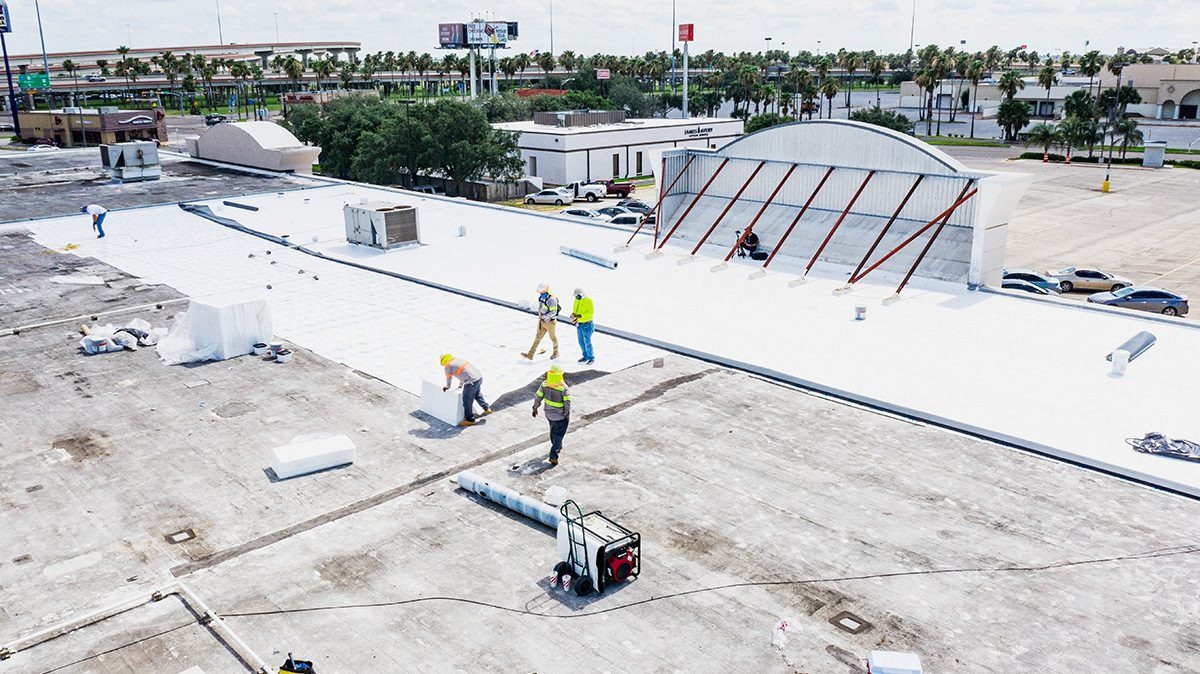
Commercial Roofing in Northeast Minneapolis
Northeast Minneapolis's commercial building stock spans 1900s light industrial converted to studio and gallery use, 1970s–1990s masonry commercial, and newer mixed-use construction along Central Avenue NE. The building variety is wide — and so is the range of roof system conditions we find when we walk these roofs.
Northeast Minneapolis is one of the most architecturally diverse commercial districts in the Twin Cities. The arts district concentrated along NE Main Street, 13th Avenue NE, and the industrial corridors east of the railroad tracks contains buildings in nearly every structural configuration: steel-framed light industrial with metal deck, masonry bearing-wall warehouses with wood plank decks, 1970s concrete-frame light industrial, and 2000s–2020s infill mixed-use. Each structural type has a different set of roof system considerations.
We have been on roofs throughout Northeast — the Casket Arts building, buildings in the Thorp Building complex, the industrial conversions along Marshall Street NE, and the mid-rise residential and commercial stock on Central and University Avenues NE. The pattern we see most often in the older Northeast stock is modified bitumen and BUR systems that have been patch-repaired multiple times without a comprehensive inspection or moisture analysis. The cumulative repairs have obscured the actual condition of the system — there are typically three to five layers of membrane and infill in the worst areas — and the recover-versus-replace decision requires moisture core analysis before any scope can be written honestly.
The Central Avenue NE corridor is a different set of buildings: 1990s–2010s commercial and mixed-use construction with first-generation TPO that is at or approaching the twenty-year mark. These buildings are mostly on individual or small-group ownership, and the maintenance history is variable. Some have well-documented maintenance records and clear warranty status; others have had no documented maintenance since the original system was installed. We inspect them the same way regardless and give the owner a written condition report that documents what we found.
Arts District Industrial Conversions
The converted industrial buildings in Northeast's arts district are some of the most structurally interesting commercial roofing projects we encounter. A building that was a metal-casting or light-manufacturing facility in 1920 and is now a studio building with twenty individual tenant spaces has a structural deck that was designed for industrial floor loads — not for the insulation and membrane stack weight that a modern commercial roof system requires. We always verify that the deck can handle the replacement system weight before finalizing the specification.
Skylights and translucent panels are common in Northeast arts district buildings — original warehouse skylights that were retained during conversion, or added during renovation to improve natural light for studio tenants. Skylight frames and curbs are among the most common leak points we find in these buildings. Our inspection documents every skylight and translucent panel: frame condition, glazing seal integrity, curb flashing condition, and whether the skylight is in active use or has been blocked. Replacement scopes for Northeast arts buildings typically include skylight curb reflashing as a standard line item.
Parapet walls on 1900s–1940s Northeast masonry buildings often show historic movement from decades of freeze-thaw cycling. Coping stones shift, mortar joints open, and water infiltrates the masonry and then freezes, expanding the crack further. A replacement scope that re-flashes the parapet without addressing the masonry condition will fail at the wall-membrane transition within two to three freeze-thaw seasons. We include a masonry assessment as part of our parapet inspection and call out any masonry repair that needs to precede the roofing work.
Central and University Avenue NE Commercial Corridors
Central Avenue NE from Broadway to 36th Avenue is one of the most active commercial corridors in Northeast Minneapolis — dense retail frontage, food and beverage, and the growing number of clinic and health service buildings that have followed the residential density up the corridor. Roof work on these buildings is constrained by parking and pedestrian access: street-level staging is limited, and tenant operations require the storefront to remain accessible during production.
University Avenue NE in the St. Anthony Main and Marcy-Holmes adjacent blocks includes a mix of building ages and uses — the St. Anthony Main riverfront complex, the restaurants and event venues near the Stone Arch Bridge, and the residential and office buildings that have developed along the river corridor. Buildings near the river have a drainage profile that is different from inland buildings: the Mississippi River valley creates a wind exposure condition that accelerates membrane wear at exposed parapet edges, and the historic riverfront industrial buildings have drainage systems that were not designed for modern rainfall intensity.
New construction in Northeast — the Quarry and the surrounding retail, the residential and mixed-use buildings along 4th Street and 2nd Street NE — is in initial-maintenance cycles. These buildings have modern deck systems and current-code insulation stacks, but the maintenance documentation for their warranties needs to be established before the first major inspection milestone passes. We offer warranty-coordination maintenance programs for these buildings.
How do you handle skylights in Northeast Minneapolis arts district buildings?
We inspect every skylight and translucent panel during the roof walk: frame condition, glazing seal integrity, curb flashing condition, and whether the skylight is in active use. Replacement scopes for Northeast arts buildings typically include skylight curb reflashing as a standard line item. If a skylight needs to be replaced or permanently sealed, we include that in the scope with the building owner's input on whether the skylight is functionally important to the tenants.
Do you assess masonry parapet walls before roof replacement in Northeast Minneapolis buildings?
Yes — always on 1900s–1940s masonry buildings. A replacement scope that re-flashes the parapet without addressing failing masonry will fail at the wall-membrane transition within a few freeze-thaw seasons. We include a visual masonry assessment as part of every parapet inspection and call out any masonry repair that needs to precede or run concurrent with the roofing work.
What is the response time for Northeast Minneapolis emergency roof calls?
Northeast Minneapolis is 15– office in normal traffic. Emergency dry-in mobilization for Northeast calls is typically within two to four hours. For buildings on our maintenance contract, we have pre-executed emergency access agreements that eliminate the authorization delay when a call comes in outside business hours.
Get a roof report for your Northeast Minneapolis building.
Our project managers will walk the roof, assess deck condition, document skylight and parapet conditions, and deliver a written report — including a masonry assessment if the building warrants it.
- Edina
- Brooklyn Park
- Downtown Minneapolis
- St Louis Park
- Roseville
- Silicone Roof Coating
- Restaurant Roofing
- Emergency Roof Repair