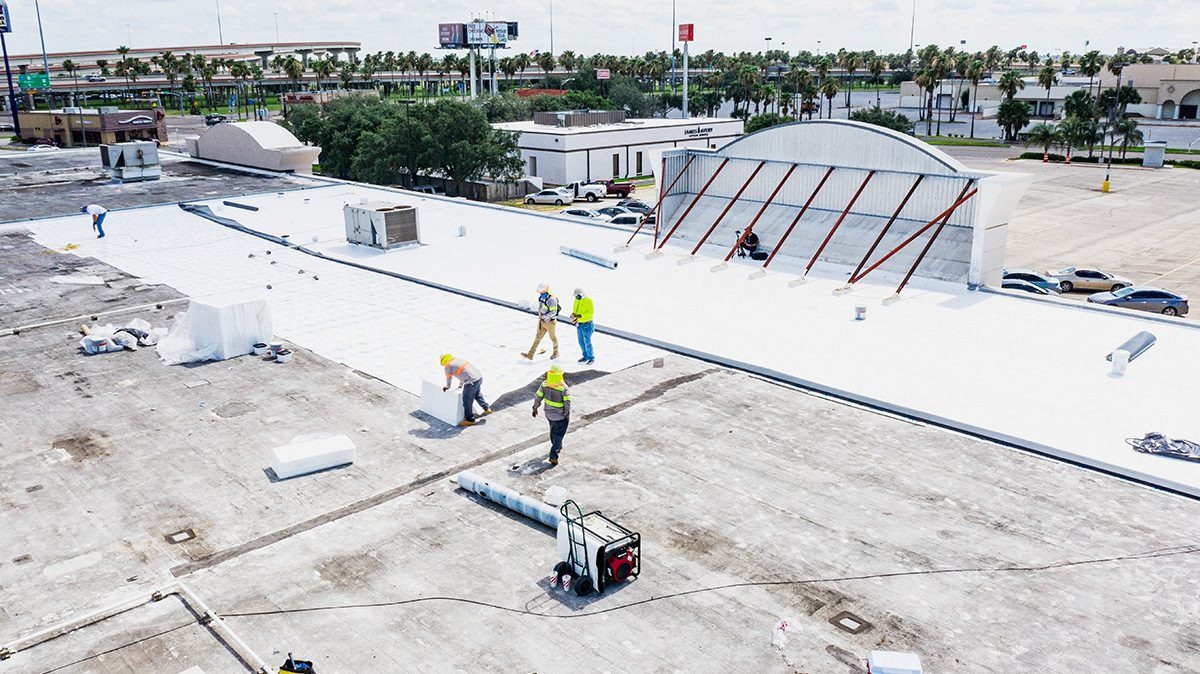
Mixed-Use Development Roofing in Minneapolis, MN
One Building, Several Roofs, One Warranty Story to Keep Straight
Mixed-use buildings stack uses that each behave differently on top. Retail and a lobby at grade, parking woven into the base, apartments or offices above, and often a rooftop amenity deck where residents actually spend time. The result isn't one roof — it's a main membrane roof, a set of setback and terrace roofs, parapet and penthouse details, and frequently an occupied plaza or podium deck that is really waterproofing, not roofing. The job is keeping all of those areas dry and keeping their separate warranties coordinated so a claim on one doesn't fall into a gap between trades.
Minneapolis has built an enormous amount of this product. The North Loop turned a district of old warehouses into ground-floor retail under loft residential almost block by block. Uptown, the North Loop, and the corridors along the light-rail Green and Blue Lines are dense with retail-over-residential mid-rises, and adaptive-reuse projects keep adding more. Every one of them combines roof areas that a single-use building never has to reconcile.
Adaptive Reuse Adds Its Own Wrinkles
A large share of Minneapolis mixed-use is conversion rather than ground-up — old warehouses, mills, and commercial blocks reborn with residential above and retail or restaurants at grade. Those buildings bring existing roof structures that were never designed for today's loads or today's amenity decks. We core and investigate before specifying anything, because a century-old deck may hide moisture, prior repairs, or a capacity that won't carry a new rooftop terrace without reinforcement. Reconciling a historic structure with a modern, multi-use waterproofing program is its own discipline, and it starts with knowing exactly what is already there.
Roofing Versus Waterproofing — Not the Same Scope
The most expensive mistake on a mixed-use building is treating an occupied deck like a roof. A standard low-slope membrane is built for drainage and the occasional maintenance technician. A podium or amenity deck has to carry pedestrian traffic, sometimes pavers or planters, constant hydrostatic pressure where landscaping holds water, root intrusion, and the structural deflection of the slab below. That calls for a traffic-bearing waterproofing assembly with drainage composites and root barriers, coordinated with the structural engineer on the load path — not a roofing membrane with a finish thrown on top. We scope the occupied areas and the membrane roofs as the distinct systems they are.
The Roof Areas Above the Living Floors
Up on the residential or office roof, the work is parapet drainage, penthouse and elevator-overrun flashing, mechanical-screen penetrations, and the waterproofing under any rooftop amenity surface. Setbacks and terraces multiply the linear feet of flashing and the number of transitions, and each transition is a place a leak can start. Because the people below are home, the constraints tighten: Minneapolis noise ordinances govern when crews can run loud work, ground-floor retail can't lose its entrance, and any work over occupied public space carries its own safety requirements.
Coordinating With Everyone Else on the Project
On a new-construction or major-renovation mixed-use job, the roofing and waterproofing scope touches the general contractor, the mechanical and plumbing subs running penetrations, the structural engineer, and usually a building-envelope consultant. We work inside that framework — submittals reviewed by the architect, manufacturer technical approval of the specified assemblies, mock-ups and water testing before full installation where the spec calls for it, and inspections at the critical phases. Construction lenders and developers expect that paper trail, and we build to it from preconstruction through final inspection.
Plenty of this work happens on buildings that are already full. Reroofing or re-waterproofing an occupied mixed-use property in the urban core takes a phasing plan that protects residents and retail tenants: dust and noise containment, coordinated elevator and common-area access through building management, advance notice to affected tenants, and absolute discipline on daily dry-in. We don't pull a crew off a section at the end of the day unless that section is watertight, because the unit directly below has someone living in it.
Amenity Decks That Get Used Year-Round
The rooftop amenity deck has become a standard selling point on Minneapolis mixed-use buildings — grilling stations, fire pits, turf lounges, and skyline views that lease units. From a waterproofing standpoint, every one of those features is a complication. Fixed grills and fire features mean gas penetrations through the assembly; planters mean standing moisture and roots; pavers on pedestals mean the membrane underneath has to be findable and repairable without demolishing the finished surface. We build these decks on a protected-membrane approach where it makes sense, so the waterproofing sits below the wear layer and insulation and isn't taking foot traffic, planter loads, and UV directly. The freeze-thaw cycling of a rooftop deck through a Minnesota winter is brutal on the wrong assembly, and an amenity space that leaks into the apartment below is a leasing problem as much as a maintenance one.
Snow, Ice, and Drainage Across Stacked Roof Levels
A mixed-use building rarely has one roof elevation. Setbacks, terraces, podium decks, and penthouse roofs create a stack of levels, and in winter each height change is a place snow drifts and ice dams. Meltwater shedding off an upper roof onto a lower terrace has to drain, not pond against a door threshold or a parapet. We coordinate drainage across the levels — primary drains and overflow scuppers sized for the contributing area, crickets and tapered insulation to keep water moving, and threshold and door-pan details at amenity-deck entries that keep wind-driven snowmelt out of the building. On occupied buildings this also means keeping drains and overflows clear through the season so a January thaw doesn't find a blocked outlet.
Documentation and Long-Term Performance
Closeout reflects the complexity: separate warranties for the membrane roofs and the waterproofing assemblies, registered in the owner's name, plus the QC and manufacturer-inspection records the lender and developer require. We map the roof areas and tie each to its system and warranty so the property manager isn't guessing, years later, which trade owns a given leak.
- Daycare Childcare Roofing
- Warehouse Roofing
- Distribution Center Roofing
- Movie Theater Roofing
- Sports Recreation Facility Roofing
- Roof Asset Management Program
- Retail Roofing
- EPDM Roofing