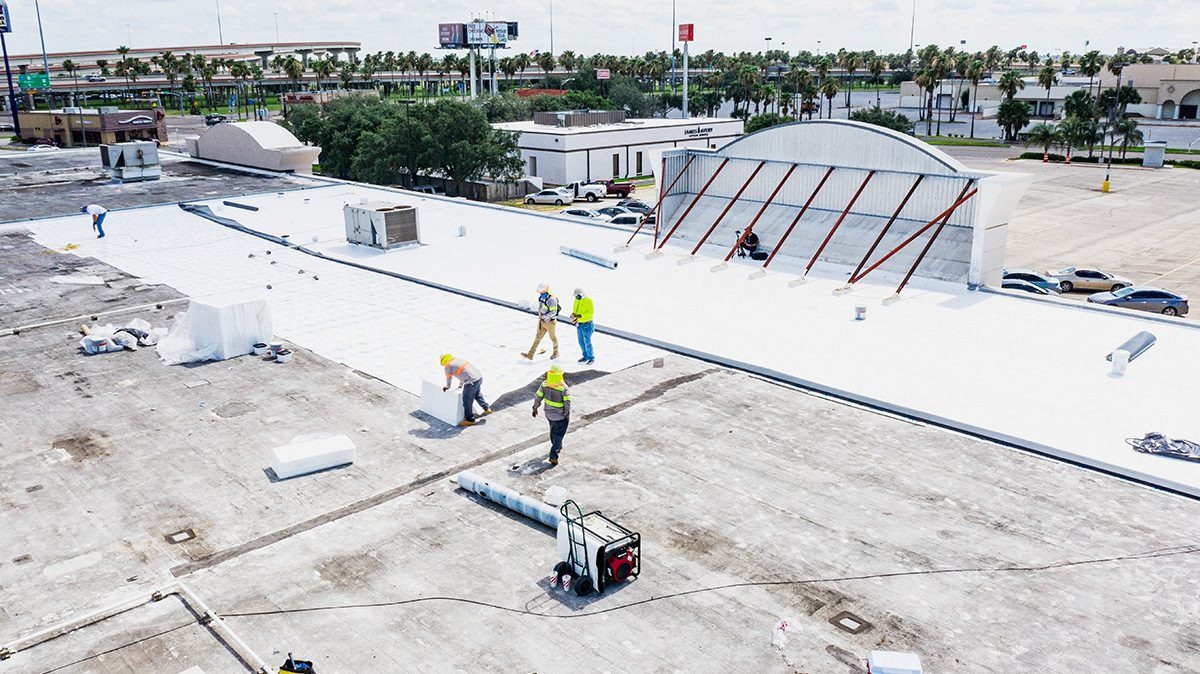
Manufacturing Facility Roofing Minneapolis — 3M, Best Buy, Medtronic & Industrial Campuses
3M's global headquarters campus in Maplewood, Medtronic's research and manufacturing facilities in Fridley and Mounds View, and Best Buy's corporate and distribution campus in Richfield represent the large-scale manufacturing and technology company campuses that anchor the Twin Cities economy. These campuses require roof work coordinated with active production schedules, environmental compliance considerations, and institutional facilities management programs.
Manufacturing facility roofing in the Twin Cities operates at the intersection of industrial scale and corporate institutional requirements. 3M's campus in Maplewood — one of the largest corporate research and manufacturing campuses in Minnesota — spans multiple decades of construction from the early 20th-century manufacturing buildings to modern research facilities and represents a multi-year capital management program for the roof asset across the entire campus. Medtronic's facilities in Fridley and Mounds View serve the company's global medical device manufacturing operations, with cleanroom environments and specialized HVAC infrastructure that impose strict requirements on any work that affects the building envelope.
Best Buy's corporate headquarters and distribution campus in Richfield — along the northern edge of I- South — includes the corporate office building, a distribution facility, and related campus buildings that have been significantly modified since the company's original campus development in the 1990s. Best Buy's facilities management team operates a structured maintenance program for the campus; we have provided condition assessments and scope letters for the facilities team's capital planning process.
Beyond the major anchor employers, the Twin Cities manufacturing sector includes a dense mid-market manufacturing population in the industrial corridors of Brooklyn Park, New Brighton, Roseville, Arden Hills, and Little Canada. These facilities — automotive parts manufacturers, food processing plants, specialty chemical manufacturers, medical device contract manufacturers — represent a large portion of our manufacturing facility work and have the same snow load and operational constraint requirements as the major corporate campuses, at a smaller scale.
3M Maplewood Campus and Corporate Manufacturing
3M's campus in Maplewood spans roughly 400 acres and includes manufacturing buildings from multiple eras, research laboratories with specialized exhaust systems, and administrative facilities. Roof work on 3M campus buildings is coordinated through the company's Global Real Estate and Facilities (GREF) department, which manages contractor qualification, site access, and project documentation for all capital work on campus. Environmental compliance is a significant consideration on 3M manufacturing buildings: some buildings have legacy environmental infrastructure on the roof (exhaust systems, spill containment features) that must be coordinated with 3M's environmental health and safety team before any adjacent roofing work begins.
The older manufacturing buildings on the 3M campus — some dating from the 1930s and 1940s — have roof conditions that mirror the North Loop and Northeast Minneapolis warehouse stock from the same era: original wood or concrete decks, multiple generations of roofing, and potential insulation saturation. We probe these buildings thoroughly before writing a replacement scope. Modern 3M research buildings from the 1980s through 2000s are typically on first or second generation single-ply systems that are at or approaching replacement decisions.
Security and badging requirements on the 3M campus require advance crew roster submission and site access coordination before production starts. We account for the security processing lead time in the construction schedule and provide the crew roster in the format 3M's security team requires at least two weeks before the planned start date.
Medtronic, Medical Device, and Cleanroom Facilities
Medtronic's main campus in Fridley and its Mounds View manufacturing and research buildings are among the most operationally sensitive facilities in the Twin Cities. The medical device manufacturing operations within these buildings require cleanroom environments maintained to ISO classification standards. Roof work above or adjacent to cleanroom spaces requires written coordination with Medtronic's facilities engineering team — any work that could introduce particulates into the building's air handling system above cleanroom spaces must be preceded by isolation of the relevant air handling zones.
Medtronic's facilities team runs a structured capital maintenance program that includes multi-year roof condition tracking. We provide condition assessment reports that integrate with this tracking program — photo-keyed zone diagrams with condition ratings for each roof section, moisture core data, drain condition documentation, and a capital priority ranking. The Medtronic facilities team can use this documentation in the company's capital allocation process for the following fiscal year.
The broader medical device manufacturing sector in the Twin Cities — Cardiovascular Systems (CSI) in New Brighton, Smiths Medical in Coon Rapids, Integer Holdings in Bainbridge Township — occupies industrial and purpose-built manufacturing facilities across the metro's north and east industrial corridors. These companies operate facilities management programs that range from professional corporate structures to small facilities staff managing all building systems. We adapt our documentation and communication approach to match what the facilities contact actually needs to make the roof capital decision.
Mid-Market Manufacturing: Brooklyn Park, Arden Hills, New Brighton
The industrial parks in Brooklyn Park — the 85th and Winnetka corridor, the Boone Avenue industrial park, and the Highway 169 manufacturing cluster — represent the densest concentration of mid-market manufacturing in the Twin Cities north metro. These buildings range from 20,000 to 200,000 square feet, with construction dating from the 1970s through the 2000s. Most are at first or second major roofing capital cycles. The typical building in this corridor is a steel-frame tilt-up or metal building with a metal deck and either mechanically-attached single-ply membrane or modified bitumen — systems that perform reliably in Minnesota conditions when maintained.
Arden Hills and New Brighton industrial facilities — including the former Twin Cities Army Ammunition Plant redevelopment area in Arden Hills (now Rice Creek Commons) and the New Brighton industrial parks along Silver Lake Road — include a mix of adaptive reuse buildings, new construction on former industrial land, and established mid-market manufacturing facilities. The former TCAAP site has produced new industrial buildings over the past decade that are at first major maintenance milestones; the surrounding established industrial stock is at the repair-versus-replace decision point on some buildings.
Process heat and humidity in food processing and specialty manufacturing plants create roof conditions that general commercial buildings do not share. Food processing facilities — concentrated in the Brooklyn Center and Brooklyn Park industrial corridors, and in Stanton and the outer ring — have interior moisture loads from cooking, washing, and processing operations that drive condensation on the underside of the roof deck. This condensation, over years, can saturate insulation and degrade deck condition from below. We probe these buildings from the interior as well as the exterior to identify deck and insulation degradation driven by interior moisture.
How do you coordinate roof work around active manufacturing production schedules?
We develop a production sequence plan with the facility manager before contract signing that identifies which roof sections can be opened without disrupting the manufacturing operations below. High-sensitivity production areas — cleanrooms, precision assembly lines, food processing zones — are scheduled last in the sequence, after the crew has established production rhythm on lower-sensitivity sections. Daily production sections are chosen so that dry-in is achievable by end of day regardless of weather conditions.
Do you work on buildings with rooftop chemical exhaust systems or environmental infrastructure?
Yes, with advance coordination with the building's environmental health and safety team. We do not disturb, remove, or modify chemical exhaust stacks, pollution control equipment, or secondary containment features on the roof without written authorization from the EHS officer and verification that the affected systems have been properly isolated or shut down. We document all environmental infrastructure on the roof in our pre-work inspection photos and restore all equipment to its pre-work operational condition before each daily production close.
What is your approach to snow load risk on large manufacturing plant roofs?
Large-span manufacturing buildings are among the highest snow load risk properties in the Twin Cities. A 200,000 square foot single-story manufacturing building in Brooklyn Park at 40 psf design snow load can carry 8 million pounds of snow at design load. We establish a written snow accumulation monitoring protocol — with measurement points and action thresholds keyed to the structural design load — for every large manufacturing building on our maintenance program. We also review the original structural design data when available to identify any sections with lower than design-standard structural capacity that warrant tighter monitoring thresholds.
Get a condition assessment and snow load analysis for your Twin Cities manufacturing facility.
Our project managers will walk the roof, document the existing system condition, probe moisture-suspect sections, and produce a written scope with production sequencing designed around your operational requirements.
- Veterinary Clinic Roofing
- Multifamily Roofing
- Convenience Store Roofing
- Car Wash Facility Roofing
- Stadium Arena Roofing
- EPDM Roofing
- Roof Replacement Planning
- University Campus Roofing