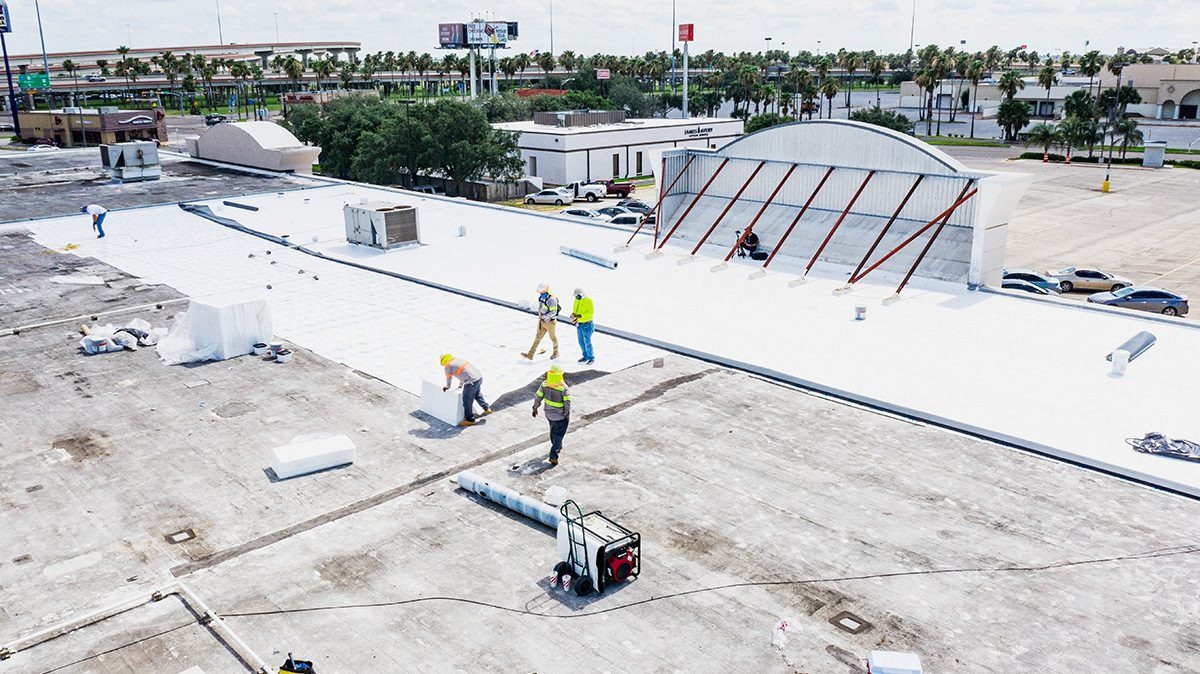
Automotive Manufacturing Roofing in Minneapolis, MN
Automotive Manufacturing Facility Roofing in Minneapolis, MN
Minnesota has a long industrial spine, and the metro's heavier manufacturing sits along the I-35W corridor, through the rail-served industrial districts of northeast and southeast Minneapolis, and out into the supplier-and-fabrication parks of the western and northern suburbs. Automotive plants, whether an assembly building, a stamping or casting operation, or a Tier 1 or Tier 2 supplier feeding the line, run on a clock where downtime carries a defined cost per hour. Plant engineering tells us that number before the contract is signed, and it shapes how we plan, mobilize, and sequence every square foot of the roof.
Scale is the first thing that makes these roofs different. A single assembly building can put hundreds of thousands, sometimes millions, of square feet under one continuous envelope, and you cannot tear off and rebuild that the way you would a strip-mall box. We section the roof into managed zones, sequence tear-off and material delivery to stay inside crane reach and laydown limits, and keep production rolling in the zones we are not touching. Add a Minnesota winter and material handling, dry-in timing, and snow removal off the work area all become part of the logistics plan rather than afterthoughts.
Paint Shops and the Hot-Work Problem
The paint shop is the zone that rewrites the rules. Paint operations generate solvent vapor and carry fire-suppression requirements that govern hot-work permits, adhesive selection, and any torch use on or above those bays. Over a paint-adjacent zone we build a hot-work plan with the plant's environmental health and safety team before anyone steps on the roof, and we specify cold adhesive or mechanical attachment instead of torch-applied systems. Solvent-based adhesives do not go above active paint. These are standard planning items for us, not surprises that stop the job.
Process Vibration and How Seams Are Built
Stamping, casting, and powertrain operations push vibration up into the structure that an ordinary commercial building never sees. Large presses cycling at production frequency can fatigue membrane seams and flashings that were detailed for a quiet office roof. We account for that exposure in the membrane spec and in the welding procedures over press-adjacent bays, so the seams are built for the dynamic load they will actually carry.
Large Decks, Real Snow, and Honest Load Math
A roof this big in this climate has to be designed for genuine ground snow load and drifting against tall equipment screens and clerestories, and the deck capacity has to be confirmed before we pile on insulation. Where drainage is deficient, we add tapered insulation to move water rather than letting it pond and freeze. Where the structure is load-constrained, we verify capacity before specifying thickness, because adding dead load to a marginal deck under a snow region is how you turn a roof project into a structural one.
Ventilation, Make-Up Air, and Welding Smoke
A plant floor moves enormous volumes of air. Welding and assembly operations exhaust smoke and fume while make-up air units pull replacement air back in, and that turnover puts large, heavy rooftop units and long duct runs across the roof, often clustered over the busiest production zones. We detail those curbs and supports for the load and the constant airflow they carry, and we keep new mechanical and the drainage around it coordinated so an exhaust field does not become a ponding field. Where process discharge is oily or warm, the downwind membrane gets the same attention we would give a cook-line on a food plant.
Hail, Wind, and Insurance-Grade Resilience
This part of the country takes real hail and straight-line wind, and a multi-acre roof over a plant is a large insured asset whose loss history follows it. We specify membrane thickness, cover boards, and impact-resistant assemblies with that exposure in mind, and we detail edge metal and perimeter fastening to the wind zone, because the perimeter and corners are where uplift starts. After a hail or wind event we can document damage for the carrier and prioritize emergency dry-in on the zones that protect active production first.
Daylight Panels and Smoke Vents
Older assembly buildings are full of translucent daylight panels and code-required smoke and heat vents, and both age faster than the field membrane and leak at the curb long before the roof does. We inventory every panel and vent, reflash or replace what is past service, and confirm the smoke vents still operate as the life-safety system intends after the roof work is done.
Documentation Built for Corporate Facility Standards
OEM and large supplier facilities expect closeout in their own format: contractor safety qualification, a site-specific safety plan, OSHA log summary, warranty registration, a roof-zone diagram with a penetration inventory, daily reports, permit records, and a photographed condition survey. We deliver the package the way each plant's engineering department requires it.
Automotive Manufacturing Roofing Questions
How do you minimize disruption on an active assembly plant?
Production continuity governs every decision. We document shift schedules with plant engineering, identify which zones sit over active lines, and phase the work zone by zone to stay clear of production, confirming dry-in before each shift change and staying in direct contact with the maintenance foreman.
How do you handle hot-work limits above the paint shop?
We build the hot-work permit plan with EHS during pre-construction and specify cold adhesive or mechanical attachment over paint-adjacent zones where torch use is excluded. These restrictions are planned in, not discovered mid-job.
What membrane do you use on large-span plant roofs?
Usually 60- or 80-mil TPO mechanically attached, with fully adhered systems in paint zones where fastener patterns conflict with hot-work limits, tapered insulation where drainage is deficient, and deck capacity confirmed before insulation thickness is set.
Do you work on Tier 1 and Tier 2 supplier plants?
Yes, and the coordination is similar to an OEM plant, often with just-in-time delivery schedules that tolerate zero interruption. We document the production schedule, sequence around it, and keep daily contact with the facilities team.
What documentation do you provide at closeout?
Safety qualification, site-specific safety plan, OSHA log summary, warranty registration, a roof-zone and penetration diagram, daily reports, permit records, and a photographed condition survey, formatted to your plant's standard.